Descuento:
-5%Antes:
Despues:
85,50 €Este libro cuenta con contenidos de Realidad Aumentada, que pueden visualizarse a través de una app para dispositivos móviles. Incluye videos.
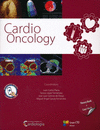
Recent advances in early detection and cancer therapeutics have revolutionized the field of Oncology. Cancer is no longer a death sentence. It is a disease that can be cured, or in many instances converted into a chronic condition. The end result is a new cohort of patients with sufficient survival to develop the cardiovascular complications of their cancer treatment.
These cardiovascular complications are of paramount importance, as they represent the number one cause of death for the cancer survivor, and they need a multidisciplinary approach. Cardiologists should be essential members of these multi-disciplinary teams, assisting them to provide coordinated and cost-effective cardiovascular monitoring before, during and after cancer treatment. The ultimate goal is the selection of the oncologic regimen that would achieve the highest possible rate of cure or remission, with the lowest possible rate of treatment withdrawals and cardiovascular side effects.
Contents
1. Cancer Epidemiology. Tumor Biology. Cancer Genomics. Therapeutic Approach to Cancer 1
1.1. Cancer Epidemiology
1 1.2. Tumor Biology 2
1.3. Cancer Genomics 3
1.4. Therapeutic Approach to Cancer 8
1.5. Cancer Medicine 9
1.6. Cancer and Society11
2. Defi nition and Classifi cation of Cancer Therapeutics-Related Cardiac Toxicity and Dysfunction. Mechanisms of Cardiac Toxicity 15
2.1. Introduction 15
2.2. Defi nition of Cancer Therapeutics-Related Cardiac Dysfunction 15
2.3. Classifi cation of Cancer Therapeutics-Related Cardiac Dysfunction 17
2.4. Mechanisms of Cardiac Toxicity 18
2.5. Conclusions 21
3. Cardiac Dysfunction Secondary to Anthracyclines 25
3.1. Introduction 25
3.2. Anthracyclines in Oncology 25
3.3. Defi nition of Anthracycline-induced Cardiomyopathy 26
3.4. Risk Factors for Anthracycline-induced Cardiomyopathy 26
3.5. Pathology of Chronic Anthracycline-induced Cardiomyopathy 27
3.6. Selection of Patients for Anthracycline Therapy27
3.7. Early Detection of Anthracycline-induced Cardiomyopathy 28
3.8. Diagnosis of Anthracycline-induced Cardiomyopathy 28
3.9. Prevention of Anthracycline-induced Cardiomyopathy 29
3.10. Treatment of Anthracycline-induced Cardiomyopathy 29
3.11. Other Chemotherapy Agents 29
3.12. Conclusions 30
4. Cancer Therapeutics-Related Cardiac Dysfunction Secondary to Tyrosine-Kinase Inhibitors: Monoclonal Antibodies and Small Molecule Tyrosine-Kinase Inhibitors 33
4.1. Introduction 33
4.2. Monoclonal Antibodies 34
4.3. Small Molecule Tyrosine-Kinase Inhibitors 37
4.4. Conclusions 39
5. Vascular Implications in Cancer Dissemination 43
5.1. Angiogenesis: a Critical Process for Tumor Growth, Progression and Dissemination 43
5.2. Critical Players in Blood Vessel Maturation and Stabilization 44
5.3. Lymphangiogenesis46
5.4. Anti-angiogenic Approaches in Cancer 47
5.5. Conclusions 49
6. Radiation-Induced Heart Disease 57
6.1. Introduction 57
6.2. Frequency and Prevalence 57
6.3. Pathophysiology 58
6.4. Risk Factors58
6.5. Challenges in Defi ning Volumes 59
6.6. Cardiotoxicity and Breast Cancer 59
6.7. Cardiotoxicity and Other Thoracic Tumors 65
6.8. Cardiotoxicity and Hodgkin Lymphoma 65
7. Use of Biomarkers in the Early Detection/ Risk Stratifi cation of Subclinical Left Ventricular Dysfunction in Patients Undergoing Cancer Therapy 73
7.1.The Role of Biomarkers as Diagnostic and Prognostic Tools in Cancer Therapy Associated Cardiotoxicity73
7.2.Troponins 73
7.3. Brain-type Natriuretic Peptide 80
7.4. Emerging Biomarkers in Assessing Cancer Therapy Induced Cardiotoxicity81
7.5. The Role of Biomarkers as Screening Tools to Aid in the Prevention of Cardiotoxicity 86
7.6. An Integrated Approach to Multiple Biomarkers and Imaging 86
7.7. Conclusions 87
8. Imaging Techniques in the Detection of Cancer Therapeutics-Related Cardiac Dysfunction: Standard Echocardiography 91
8.1. Introduction 91
8.2. Left Ventricular Ejection Fraction 91
8.3. Diastolic Function 95
8.4. Right Ventricular Function 96
8.5. Special Considerations in Radiotherapy 97
8.6. Echocardiography Monitoring Guidelines for Cancer Therapeutics-Related Cardiotoxicity 98
8.7. Conclusion 101
9. Imaging Techniques in the Detection of Sub-Clinical Left Ventricle Dysfunction 107
9.1. Introduction 107
9.2. Strain Imaging 107
9.3. Left Ventricular Torsion and Twist 115
9.4. Conclusions 115
10. Imaging Techniques in the Detection of Cancer Therapeutics-Related Cardiac Toxicity117
10.1. Introduction 117
10.2. Equilibrium Radionuclide Angiography 117
10.3. Cardiac Magnetic Resonance Imaging 120
11. Myocardial Ischemia and Acute Coronary Syndrome in Cancer Patients 131
11.1. Introduction 131
11.2. Risk Factors and Pathophysiology 131
11.3. Diagnostic Criteria and Diagnostic Testing for Myocardial Ischemia and Acute Coronary Syndromes 134
11.4. Treatment of Acute Coronary Syndromes in Cancer Patients 136 12. Peripheral Arterial Disease in Cancer Patients 143
12.1. Introduction 143
12.2. Incidence 143
12.3. Etiology and Pathophysiology 144
12.4. Suggested Algorithm for Evaluation of Arterial Ischemic Events in Patients with Underlying Malignancy 149
12.5. Management 149
12.6. Outcome 150
12.7. Conclusions 151
13. Thrombosis, Coagulation and Cancer 157
13.1. Introduction 157
13.2. Causes Favoring Thrombotic Phenomena in Cancer Patients 158
13.3. Why do Cancer Cells Promote Platelet Activation? 158
13.4. Mechanisms Associated with Venous Thromboembolism 159
13.5. Biomarkers to Predict the Risk of Thromboembolic Events in Cancer Patients160
13.6. Pharmacologic Prevention of Thrombo-coagulating Events in Cancer Patients 161
13.7. Genetic Alterations Related to Cancer and Risk of Thromboembolic Events 161
14. Management of Cardiac Insuffi ciency and Heart Failure in Cancer Patients 165
14.1. Introduction 165
14.2. Detection of Heart Failure in Cancer Patients 165
14.3. Adjustments to Chemotherapy in Patients with Heart Failure or Left Ventricular Dysfunction 166
14.4. Hypertension as a Precursor to Heart Failure 168
14.5. Survivors of Cancer Therapy (Post-treatment) and Risk of Heart Failure168
14.6. Conclusions 169
15. Arrhythmias and Cardiac Devices in Oncology Patients 173
15.1. Introduction 173
15.2. Cardiac Arrhythmias 173
15.3. Cardiac Electrophysiologic Study179
15.4. Cardiac Devices 179
15.5. Conclusions 182
16. Other Complications: Myocarditis, Pericardial Disease, Valvular Heart Disease 185
16.1. Introduction 185
16.2. Mechanisms of Cancer Therapy-Induced Cardiotoxicity 185
16.3. Myocarditis 186
16.4. Pericardial Disease 186
16.5. Valve Disease 187
16.6. Conclusions 188
17. Systemic Hypertension and Cancer 191
17.1. Introduction 191
17.2. Antihypertensive Therapy and Cancer Risk 191
17.3. Cancer Therapy Causes Hypertension 194
18. Cardiac Tumors: Presentation, Imaging and Management Options 201
18.1. Introduction 201
18.2. Epidemiology 201
18.3. Clinical presentation 203
18.4. Diagnosis205
18.5. Pathology and Prognosis 207
18.6. Treatment208
19. Prevention of Cardiotoxicity: New Strategies in the Management of Cancer Therapeutics 215
19.1. Introduction 215
19.2. Left Ventricular Dysfunction 215
19.3. QT Interval Prolongation 221
19.4. Venous Thrombosis 222
19.5. Ischemia 224
20. Treatment of Cardiovascular Risk Factors in Cancer Patients 233
20.1. Introduction 233
20.2. Lifestyle Recommendations in Cancer Patients 233
20.3. Management of Hypertension in Cancer Patients 234
20.4. Treatment of Dyslipidemia in Cancer Patients 236
20.5. Diabetes Mellitus and Cancer 236
20.6. Conclusions 238
21. Cardio-protection: Early Detection and Treatment of Subclinical Left Ventricle Dysfunction 241
21.1. Background241
21.2. Potential Targets 242
21.3. Protective Therapies 243
21.4. Potential Strategies 245
21.5. Conclusion: Need for Evidence246
22. Surveillance of Cardiotoxicity during Chemotherapy and Radiotherapy 251
22.1. Introduction. Defi nition of Cardiovascular Toxicity of Cancer Therapy 251
22.2. Why Is There a Need for Surveillance of Cardiotoxicity During Chemotherapy and Radiotherapy 252
22.3. Risk Stratifi cation: Defi nition of the Populations that Require Surveillance During Chemotherapy and Radiotherapy 253
22.4. How to Monitor Heart Function during Chemotherapy and Radiotherapy. Follow-up Tools 255
22.5. Preventive Measures and Early Cardiotoxicity Treatment 260
22.6. Defi ning the Timescale for an Appropriate Surveillance261
23. Long-term Follow-up of Patients Treated with Chemotherapy/Radiotherapy 267
23.1. Introduction. Magnitude of the Problem 267
23.2. Acute versus Chronic Chemotherapeutic Cardiotoxicity 267
23.3. Long-Term Chemotherapy-Related Toxicity: Epidemiology 268
23.4. Long-term Monitoring of Patients Treated for Cancer 271
23.5. Cardiotoxicity and Radiotherapy in Cancer Treatment 273
23.6. Risk Factors for Radiotherapy-Related Cardiotoxicity. Basic Guidelines for Monitoring 276
24. Organization and Implementation of a Cardio-Oncology Center 281
24.1. Introduction 281
24.2. Defi nition of Cardio-Oncology Multidisciplinary Teams 281
24.3. Organization of Cardio-Oncology Multidisciplinary Teams 282
24.4. Quality indicators 285
24.5. Cardio-Oncology in a Cancer Survivorship Program 286
24.6. Conclusions 288
Instructions for the use of Augmented Reality 290
 -5%
-5%
 -5%
-5%
 -5%
-5%
 -5%
-5%
 -5%
-5%
 -5%
-5%
 -5%
-5%
 -5%
-5%
 -5%
-5%
 -5%
-5%