Descuento:
-5%Antes:
Despues:
138,31 €1. An Overview
2. Imatinib: Basic Results
3. Imatinib: Clinical Pharmacology and Therapeutic Results
4. Dasatinib, Nilotinib, Bosutinib, Ponatinib, and Other TKIs
5. Rituximab and Alemtuzumab for Chronic Lymphocytic Leukemia: Basic Results and Pharmacokinetics
6. Rituximab and Alemtuzumab for Chronic Lymphocytic Leukemia: Clinical Pharmacology and Therapeutic Results
7. Inotuzumab Ozogamicin for Acute Lymphoblastic Leukemia: Clinical Pharmacology and Therapeutic Results
8. Blinatumomab for Acute Lymphoblastic Leukemia: Clinical Pharmacology and Therapeutic Results
9. Mogamulizumab in Adult T-Cell Leukemia/Lymphoma
10. FLT3 Inhibitors
11. Retinoic Acid, All-trans Retinoic Acid (ATRA), and Tamibarotene
12. The Molecular Basis of Arsenic Trioxide Treatment for Acute Promyelocytic Leukemia (APL)
13. Arsenic Trioxide: Clinical Pharmacology and Therapeutic Results
14. Nelarabine
15. Forodesine
16. Clofarabine: Structure, Mechanism of Action, and Clinical Pharmacology
17. Clinical Use of Clofarabine for Adults and Children with Leukemia
18. Re-emerging Antimetabolites with Novel Mechanism of Action with Respect to Epigenetic Regulation: Basic Aspects
19. Epigenetic Regulator, Re-emerging Antimetabolites with Novel Mechanism of Action (Azacitidine and Decitabine): Clinical Pharmacology and Therapeutic Results
20. Therapies Targeting Leukemic Stem Cells
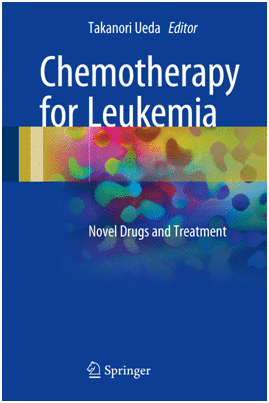
This book focuses on the latest progress in chemotherapy for leukemia and related diseases, including still-ongoing but promising studies. The effectiveness of treatment for chronic myeloid leukemia and acute promyelocytic leukemia has been dramatically improved in recent years. This improvement has been made possible with the development of molecular targeted agents such as bcr-abl tyrosine kinase inhibitors and all-trans retinoic acid. The antibody for the unique target of chemokine receptor 4 for adult T-cell leukemia/lymphoma, or FLT3 inhibitors (signaling inhibitors) has been applied to other leukemias. Also, chemotherapeutic agents including antimetabolite analogues such as clofarabine, and azacitidine (an epigenetic regulator) have undergone progressive development. Meanwhile, the novel concept of therapy targeting leukemic stem cells has been developed. The contributors discuss prospective results of basic and preclinical studies and clinical possibilities based on the effects for leukemic stem cells.
This work facilitates a comprehensive understanding of modern treatment methodology for leukemia. The volume therefore will greatly benefit not only hematologists but also oncologists, all physicians who specialize in blood cancer, and pharmacologists who are involved in the development of therapeutic agents for leukemia.
Features
• Elucidates the latest progress in chemotherapy for leukemia and related diseases
• Presents prospective results of basic and preclinical studies for leukemia
• Maximizes reader insight into modern treatment methodology for leukemia
Author
Takanori Ueda. Vice-President, University of Fukui Faculty of Medical Sciences,. 3-9-1 Bunkyo, Fukui 910-8507, Japan
 -5%
-5%
 -5%
-5%
 -5%
-5%
 -5%
-5%
 -5%
-5%
 -5%
-5%
 -5%
-5%
 -5%
-5%
 -5%
-5%
 -5%
-5%