Descuento:
-5%Antes:
Despues:
108,67 ۥ Pre-conception risk assessment
• Medical problems (advanced age, endocrine disease, obesity, malignancies, turner’ s syndrome etc.)
• Gynaecological problems (fibroids, polyps, congenital uterine anomalies, hydrosalpinx, endometriosis, PCOS)
• Psychological issues of periconceptual period
• Pre-conceptual diagnosis (PGD/ PGS/CGH)
• Complications of ART and associated early pregnancy problems (OHSS, ectopic pregnancy, miscarriage)
• Early pregnancy support: evidence based management (progesterone/ folic acid/ heparin and aspirin etc)
• Pre-natal screening options (congenital anomalies, aneuploidies, impact of IVF on serum screening)
• Multiple pregnancy
• Pregnancy associated complication (Hypertensive disorders, growth disorders, placental site problems, older women, conception following donor treatment, Surrogate pregnancies)
• Intrapartum and post partum care (are they at risk of intrapartum problems?, depression due to high expectation)
• Ongoing developments in ART and pregnancy outcome (IVM, fertility preservation: ovarian tissue/whole ovary/ oocyte cryopreservation).
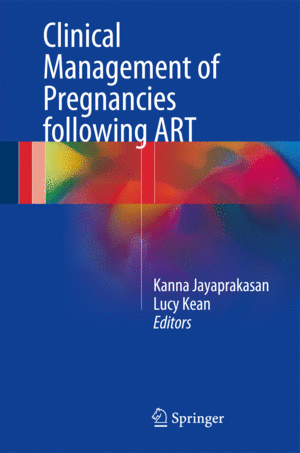
This book provides a detailed overview of the possible risks associated with ART pregnancies and their clinical management.
While most pregnancies following Assisted Reproduction Treatment (ART) will progress normally and without any complications to mother or baby, some women who conceive after ART as well as their babies are at increased risk of pregnancy complications. There are some schools of thoughts proposing pregnancies following IVF should be regarded as being “high risk” and requires special attention. There are various reasons why ART pregnancies may be at higher risk – Female and male age factor, increased chance of multiple pregnancies, underlying cause of subfertility (pelvic pathology, uterine pathology, endometrial dysfunction) and potential increase in birth defects.
This is an essential read for obstetricians, fertility specialists and Post-graduate trainees.
Features
• Provides a detailed overview of the possible risks associated with ART pregnancies and their clinical management
• Dedicated sections for pre-pregnancy care including the psychological component of the periconceptual period
• Addresses ongoing developments in assisted reproductive technologies and pregnancy outcome
Authors
• Mr Jayaprakasan is a Royal College (RCOG) accredited sub-specialist in Reproductive Medicine and Surgery. He has completed his subspecialty training at NURTURE, Queen's Medical Centre, Nottingham, where he subsequently worked as IVF Consultant and Associate Professor for two years before he moved to take up the lead consultant role at Derby fertility unit.
Mr Jayaprakasan's special interests include Assisted Conception (IVF/ICSI), Reproductive surgeries (Laparoscopy and Hysteroscopy), recurrent pregnancy loss, recurrent implantation failure, PCOS and endometriosis. Mr Jayaprakasan is an expert in the application of advanced pelvic ultrasound in the field of fertility, in which he has done his PhD.
• Lucy H. Kean, Bm, BCh, DM, FRCOG. Consultant in Fetal and Maternal medicine. Chief of service for Obstetrics and Gynaecology. Nottingham University Hospitals NHS Trust. Department of Obstetrics. Nottingham. United Kingdom
 -5%
-5%
 -5%
-5%
 -5%
-5%
 -5%
-5%
 -5%
-5%
 -5%
-5%
 -5%
-5%
 -5%
-5%
 -5%
-5%
 -5%
-5%