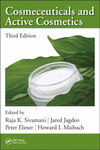
SIVAMANI, R. K.; JAGDEO, J. R.; ELSNER, P.; MAIBACH, H.
Descuento:
-5%Antes:
Despues:
188,10 €Bakuchiol: A Retinol-Like Functional Compound, Modulating Multiple Retinol and Non-Retinol Targets
Cutaneous Applications of Caffeine
Curcumin in Cosmetics: Biochemical Basis for Skin Repair with Use of Topical Curcumin
The Cosmetic and Therapeutic Uses for Epicatechin-3-Gallate (EGCG)
Ellagic Acid
Gamma-Linolenic Acid-Containing Vegetable Oils
Hexylresorcinol: Providing Skin Benefits by Modulating Multiple Molecular Targets
Hydroxyacids
Kinetin
Topical Resveratrol
Impact of Rhodiola rosea on Skin
Silymarin
Topical Niacinamide
Anti-Aging Topical Peptides and Proteins
Amino Acids and Derivatives
Antioxidants
Decorative Cosmetics
Hair Cosmetics and Cosmeceuticals
Moisturizers: Treatment of Dry Skin Syndrome and Barrier Defects
Cosmeceutical Treatments of the Nail
Botanicals and Cosmeceuticals for Sun Protection
UV Care
Topical Vitamins E, C, and Ferulic Acid and Topical L-Selenomethionine
The Use of Cosmeceuticals in Rosacea
Cosmeceutical Treatments for Androgenetic Alopecia
Eczema, Xerosis, and Cutaneous Barrier Repair
Melasma and Depigmentation Agents
The Use of Cosmeceuticals for Oily Skin, Seborrhea, and Seborrheic Dermatitis
Cosmeceutical Treatments for Purpura
Vitiligo (Repigmentation Agents)
Botanical Extracts
Biomarine Actives
Analytical Chemistry of Botanical Extracts
Legal Distinction in the United States between a Cosmetic and a Drug
Features
- Analyzes nearly two dozen ingredients of cosmeceutical products used for a wide variety of conditions
- Reviews toxicology, product development, and manufacturing
- Discusses cosmeceutical products used for rosacea, dry skin, alopecia, eczema, seborrheic dermatitis, purpura, and vitiligo
- Covers the legal distinction between a cosmetic and a drug
Summary
Cosmeceuticals and Active Cosmetics discusses the science of nearly two dozen cosmeceuticals used today. This third edition provides ample evidence on specific cosmeceutical substances, their classes of use, skin conditions for which they are used, and points of interest arising from other considerations, such as toxicology and manufacturing. The book discusses both cosmetic and therapeutic uses of cosmeceuticals for various conditions including rosacea, dry skin, alopecia, eczema, seborrheic dermatitis, purpura, and vitiligo.
Active ingredients in the following products are discussed: caffeine, curcumin, green tea, Rhodiola rosea, milk thistle, and more. Also covered are topical peptides and proteins, amino acids and derivatives, antioxidants, vitamins E and C, niacinamide, botanical extracts, and biomarine actives. Providing ample scientific references, this book is an excellent guide to understanding the science behind the use of cosmeceuticals to treat a variety of dermatological conditions.
Editor(s) Bio
Raja K. Sivamani, MD, assistant professor of clinical dermatology, University of California, Davis, USA
Jared R. Jagdeo, MD, MS, Department of Dermatology, University of California-Davis School of Medicine, Sacramento, California; and Department of Dermatology, State University of New York Downstate Medical Center, Brooklyn, New York, USA
Peter Elsner, MD, Department of Dermatology, Friedrich-Schiller-Universität, Jena, Germany
Howard I. Maibach, MD, University of California School of Medicine, Department of Dermatology, San Francisco, USA
 -5%
-5%
 -5%
-5%
 -5%
-5%
 -5%
-5%
 -5%
-5%
 -5%
-5%
 -5%
-5%
 -5%
-5%
 -5%
-5%
 -5%
-5%