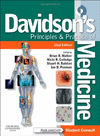
WALKER, B.; COLLEDGE, N.; RALSTON, S.; PENMAN, I.
Descuento:
-5%Antes:
Despues:
62,24 €Part 1 - Principles of medicine
Good medical practice
Therapeutics and good prescribing
Molecular and genetic factors in disease
Immunological factors in disease
Environmental and nutritional factors in disease
Principles of infectious disease
Ageing and disease
Part 2 - Practice of medicine
Critical illness
Poisoning
Medical psychiatry
Oncology
Palliative care and pain
Infectious disease
HIV infection and AIDS
Sexually transmitted infections
Clinical biochemistry and metabolism
Kidney and urinary tract disease
Cardiovascular disease
Respiratory disease
Endocrine disease
Diabetes mellitus
Alimentary tract and pancreatic disease
Liver and biliary tract disease
Blood disease
Rheumatology and bone disease
Neurological disease
Stroke disease
Skin disease
Laboratory reference ranges
More than two million medical students, doctors and other health professionals from around the globe have owned a copy of Davidson’s Principles and Practice of Medicine since it was first published. Today’s readers rely on this beautifully illustrated text to provide up-to-date detail of contemporary medical practice, presented in a style that is concise and yet easy to read. Davidson’s provides the factual knowledge required to practise medicine, explaining it in the context of underlying principles, basic science and research evidence, and shows how to apply this knowledge to the management of patients who present with problems rather than specific diseases. The book has won numerous prizes including being highly commended in the British Medical Association book awards.
Davidson’s global perspective is enhanced by the input of an international team of authors and a distinguished International Advisory Board from 17 countries. Building on the foundations laid down by its original editor, Davidson’s remains one of the world’s leading and most respected textbooks of medicine.
New to this edition
- A new chapter specifically on Stroke Disease recognises the emergence of Stroke Medicine as a distinct clinical and academic discipline.
- A rationalisation of the 1350 boxes used throughout the book gives a simpler and clearer presentation of the various categories.
- New ‘In Adolescence’ boxes recognise the fact that many chronic disorders begin in childhood and become the responsibility of physicians practising adult medicine. These boxes acknowledge the overlap ‘transitional’ phase and highlight the key points of importance when looking after young people.
- The regular introduction of new authors and editors maintains the freshness of each new edition. On this occasion Dr Ian Penman has joined the editorial team and 18 new authors bring new experience and ideas to the content and presentation of the textbook.
- An expanded International Advisory Board of 38 members includes new members from several different countries.
 -5%
-5%
 -5%
-5%
 -5%
-5%
 -5%
-5%
 -5%
-5%
 -5%
-5%
 -5%
-5%
 -5%
-5%
 -5%
-5%
 -5%
-5%