Descuento:
-5%Antes:
Despues:
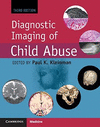
205,20 €This updated edition of the leading text on the imaging of child abuse and its imitators combines radiographic images with pathologic correlates of injury through abuse. Presented in full color for the first time, it contains many new photomicrographs and clinical images of bone scintigraphy, CT and sonography. Presenting radiologic findings in clinical, biomechanical and medicolegal contexts, a wealth of new material relating to extremity, thoracic and intracranial injuries is included. Chapters on extra-axial collections, parenchymal, visceral and miscellaneous injuries and MRI physics have been revised and expanded, while new chapters cover disorders of calcium and phosphorus metabolism and an extended discussion of skeletal injury. Complete with technical discussions explaining the physical principles and instrumentation of imaging equipment, this is essential reading for radiologists, pediatricians, forensic pathologists and emergency room physicians. Additionally, it will be of interest to a wide array of legal professionals.
- Covers the physical basis for imaging studies, explaining how images are generated in radiography, CT and MRI
- Hundreds of radiographic and photographic images are displayed side-by-side, many in color, giving the reader clear examples for use in diagnosis
- Provides analysis of the legal issues faced by professionals involved in cases of alleged abuse, allowing them to understand their responsibilities and prepare for court testimonials
Author
Paul K. Kleinman, Children's Hospital Boston
Paul K. Kleinman, MD, FAAP, is Professor of Radiology at Harvard Medical School and director of Musculoskeletal Imaging in the Department of Radiology at Children's Hospital Boston, Boston, MA, USA.
CONTENTS:
Part I. Skeletal Trauma:
1. The skeleton: structure, growth and development, and basis of skeletal injury
2. Skeletal trauma: general considerations
3. The lower extremity
4. The upper extremity
5. Bony thoracic trauma
6. Dating fractures
7. Differential diagnosis I: diseases, dysplasias and syndromes simulating abuse
8. Differential diagnosis II: disorders of calcium and phosphorus metabolism
9. Differential diagnosis III: osteogenesis imperfecta
10. Differential diagnosis IV: accidental trauma
11. Differential diagnosis V: obstetric trauma
12. Differential diagnosis VI: normal variants
13. Evidence-based radiology and child abuse
14. Skeletal imaging strategies
15. Postmortem imaging
Part II. Abusive Head and Spinal Trauma: Editor""s note regarding the abusive head and spinal trauma section
Introduction to the abusive head and spinal trauma section
16. Abusive head and spinal trauma: clinical and biomechanical considerations
17. Abusive head and spinal trauma: scalp, subscalp and cranium
18. Abusive head and spinal trauma: extraaxial hemorrhage and non-hemic collections
19. Abusive head and spinal trauma: parenchymal injury
20. Abusive head and spinal trauma: intracranial imaging strategies
21. Abusive head and spinal trauma: abusive craniocervical junction and spinal trauma
Part III. Visceral Trauma and Miscellaneous Abuse and Neglect: 22. Visceral trauma
23. Miscellaneous forms of abuse and neglect
Part IV. Diagnostic Imaging of Abuse in Societal Context: 24. Psychosocial considerations
25. Child abuse and the law I: general issues for the radiologist
26. Child abuse and the law II: the radiologist in court and fundamental legal issues
27. The radiologist""s response to child abuse
Part V. Technical Considerations and Dosimetry: 28. Radiological image formation: physical principles, technology and radiation dose considerations
29. The physics and biology of magnetic resonance imaging (MRI): medical miracle anyone?
30. Quality assurance and radiographic skeletal survey standards
Index.
 -5%
-5%
 -5%
-5%
 -5%
-5%
 -5%
-5%
 -5%
-5%
 -5%
-5%
 -5%
-5%
 -5%
-5%
 -5%
-5%
 -5%
-5%