Descuento:
-5%Antes:
Despues:
305,29 €PART I: EPIGENETICS AND EVOLUTION.
1.Chromatin Organization, Epigenetics and Differentiation: An Evolutionary Perspective
2.Secondary Structures of the Core Histone N-terminal Tails: Their Role in Regulating Chromatin Structure
3.Megabase Replication Domains Along the Human Genome: Relation to Chromatin Structure and Genome Organisation
4.Role of DNA Methyltransferases in Epigenetic Regulation in Bacteria
PART II: DEVELOPMENTAL EPIGENETICS.
5.Metabolic Aspects of Epigenome: Coupling of
6.Epigenetic Regulation of Male Germ Cell Differentiation
7.Epigenetic Regulation of Skeletal Muscle Development and Differentiation
8.Small Changes, Big Effects: Chromatin Goes Aging
9.Homeotic Gene Regulation: A Paradigm for Epigenetic Mechanisms Underlying Organismal Development
PART III: EPIGENETICS AND TRANSCRIPTION REGULATION.
10.Basic Mechanisms in RNA Polymerase I Transcription of the Ribosomal RNA Genes
11.The RNA Polymerase II Transcriptional Machinery and Its Epigenetic Context
12.RNA Polymerase III Transcription – Regulated by Chromatin Structure and Regulator of Nuclear Chromatin Organization
13.The Role of DNA Methylation and Histone Modifications in Transcriptional Regulation in Humans
14.Histone Variants and Transcription Regulation
15.Noncoding RNAs in Chromatin Organization and Transcription Regulation: An Epigenetic View
16.Chromatin Structure and Organization: The Relation with Gene Expression During Development and Disease
PART IV: EPIGENETICS AND DISEASE.
17.Cancer: An Epigenetic Landscape
18.Epigenetic Regulation of Cancer Stem Cell Gene Expression
19.Role of Epigenetic Mechanisms in the Vascular Complications of Diabetes
20.Epigenetic Changes in Inflammatory and Autoimmune Diseases
21.Epigenetic Regulation of HIV-1 Persistence and Evolving Strategies for Virus Eradication
22.Epigenetics in Parkinson’s and Alzheimer’s Diseases
PART V: UNDERSTANDING OF EPIGENETICS: A CHEMICAL BIOLOGY APPROACH AND EPIGENETIC THERAPY.
23.Cellular Redox, Epigenetics and Diseases
24.Stem Cell Plasticity in Development and Cancer: Epigenetic Origin of Cancer Stem Cells
25.Histone Acetylation as a Therapeutic Target
26.DNA Methylation and Cancer
27.Role of Epigenetics in Inflammation-Associated Diseases
28.Plasmodium falciparum: Epigenetic control of var gene regulation and disease.
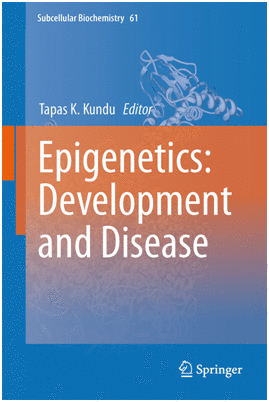
Epigenetics is the phenomenon which fine tunes the processes associated with life, beyond that which is specified by the sequence of the genetic material; DNA. The covalent modification of DNA, DNA associated histones, several non histone proteins as well as non coding RNA coherently operate to establish the epigenetic regulation of gene expression in physiological and pathophysiological conditions. This volume presents contributions from worldwide experts presenting their research and findings, including: the evolution of epigenetic machineries from archaea to higher eukaryotes; role of epigenetics in development and transcription regulation; epigenetic landscape of human disease; a chemical biology approach to understanding epigenetic phenomena; exploration of different small molecules as epigenetic therapies. This volume is aimed at students and researchers of chromatin biology and epigenetics and will also be of interest to a broader pharmaceutical audience.
Features
• Role of genome organisation as a basic platform of different epigenetic phenomena in the pathophysiological context
• Epigenetic regulation of transcription Epigenetic contribution in development
• Epigenetic mechanisms of important diseases such as diabetes, AIDS, Alzheimer?s disease, malaria and cancer Furthermore, the book has also revealed the epigenetic phenomena as target of new generation therapeutics
 -5%
-5%
 -5%
-5%
 -5%
-5%
 -5%
-5%
 -5%
-5%
 -5%
-5%
 -5%
-5%
 -5%
-5%
 -5%
-5%
 -5%
-5%