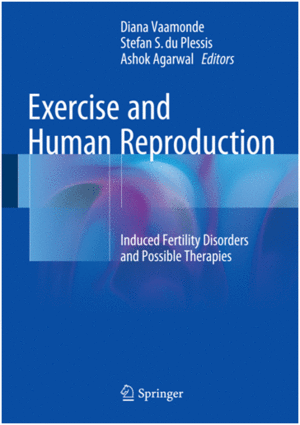
VAAMONDE, D.; DU PLESSIS, S.; AGARWAL, A.
Descuento:
-5%Antes:
Despues:
118,55 €1. Overview of the Male Reproductive System
2. Overview of the Female Reproductive System
3. Overview of Fertilization, Gestation, and Parturition
4. Conceptual and Terminological Foundations for the Sciences of Physical Exercise: New Perspectives
5. Sports Physiology and Endocrinology (Endurance vs. Resistance Exercise)
6. General Adaptations to Exercise: Acute Versus Chronic and Strength Versus Endurance Training
7. Impact of Physical Activity and Exercise on Male Reproductive Potential: Semen Alterations
8. Hormonal Changes Associated with Physical Activity and Exercise Training
9. Common Male Reproductive Tract Pathologies Associated with Physical Activity, Exercise, and Sport
10. Consequences of the Use of Anabolic-Androgenic Steroids for Male Athletes’ Fertility
11. Impact of Physical Activity and Exercise on Female Reproductive Potential
12. Hormonal and Reproductive Changes Associated with Physical Activity and Exercise
13. Risk Biotypes and the Female Athlete Triad
14. Consequences of the Use of Anabolic-Androgenic Steroids on Female Athletes’ Fertility
15. Impact of Intense Physical Activity on Puberty and Reproductive Potential of Young Athletes
16. Physical Activity and Pregnancy
17. Impact of Combined Oral Contraceptive Use on Exercise and Health in Female Athletes
18. Oxidative Stress and Infertility: A Possible Link to Exercise
19. Nutritional Deficiencies and Impairment of Fertility in Athletes
20. Nutritional Strategies to Reduce Potential Fertility Problems Induced by Exercise. Nutritional and Exercise Strategies to Improve Fertility Disorders
Providing a comprehensive review of the interactions between exercise and human reproduction, this unique text focuses on both the positive and negative consequences of sport and physical activity on male and female fertility and infertility and the biological mechanisms and processes behind them. Beginning with a review of the structure and function of the male and female reproductive systems as well as fertilization and gestation, the discussion then turns to the physiology and endocrinology of sport and exercise, which is further elaborated in subsequent chapters on the impact of physical activity, hormonal changes, pathologies, and consequences of drug use for active men and women. Additional chapters address related topics, such as the impact of sport on young athletes and developing reproductive potential, physical activity and pregnancy, the use of oral contraceptives in athletes, oxidative stress, and the impact of nutritional deficiencies on athletes’ fertility, with a final chapter providing recommendations and therapeutic guidelines for exercise-related reproductive disorders. Covering everything from the fundamental principles of sports physiology and human reproductive potential to the interaction between physical exercise and the endocrinology of the reproductive system, Exercise and Human Reproduction is an authoritative resource for helping clinicians understand how the reproductive system adapts to activity and exercise and offers strategies to avoid potential harm to human reproduction.
Features
• A unique text that brings together knowledge and expertise from the fields of sports medicine and reproductive medicine
• Discusses the structure and function of the male and female reproductive systems as well as fertilization and gestation, the physiology and endocrinology of sport and exercise, and the impact of physical activity, hormonal changes, pathologies, and consequences of drug use for active men and women
• An invaluable tool for basic scientists and professionals working in the fields of sports performance and human reproduction
Authors
• Diana M. Vaamonde Martin,PhD, Department of Morphological Sciences, University of Cordoba, Reproductive Care Center, Gynemed,Cordoba, Spain
• Stefan S. du Plessis, MBA, PhD (Stell),Division of Medical Physiology, Department of Biomedical Sciences, Stellenbosch University, Tygerberg, Cape Town, South Africa
• Ashok Agarwal, PhD, HCLD (ABB), ELD (ACE), American Center for Reproductive Medicine and, The Andrology Center, Cleveland Clinic Foundation, Cleveland, OH, USA
 -5%
-5%
 -5%
-5%
 -5%
-5%
 -5%
-5%
 -5%
-5%
 -5%
-5%
 -5%
-5%
 -5%
-5%
 -5%
-5%
 -5%
-5%