Descuento:
-5%Antes:
Despues:
123,50 €List of Contributors
Foreword
Preface
Part 1: Introduction: Neuroimmune Regulation in Health and Disease
• Chapter 1: Neuroimmune Regulation in Health and Disease
Abstract
1. Introduction
2. Disease
3. Discussion
4. Conclusions
• Chapter 2: The Neuroimmune Supersystem
Abstract
1. Introduction
2. The neuroimmune supersystem
3. Immunocompetence
4. Growth signaling in the IS
5. Immune neuroendocrine feedback signals
6. Homeostasis, the immune-neuroendocrine circuitry
7. Acute illness
8. Healing
9. Conclusions: the biological significance of NISS
Part 2: Hypothalamic Immunoregulation
• Chapter 3: Multifactorial Regulation of GLH Hormones
Abstract
1. Immunoregulation by the pituitary gland
2. Immunoregulation by growth and lactogenic hormones
3. Dopamine in neuroimmune biology
4. Immunoregulation by dopamine
5. Oxytocin and ghrelin in immunity
6. Conclusions
• Chapter 4: An Update on Neural Regulators of the Hypothalamic-Pituitary-Adrenal Axis
Abstract
1. Corticotropin-releasing hormone
2. Neuropeptide regulators of the HPA axis
3. CRH and the CNS
4. CRH-Receptors 1 and 2 (CHR1, 2) and UCN Receptors
5. Hormonal immunoregulation and the HPA axis
6. Discussion
• Chapter 5: Arginine Vasopressin: An Immunoregulatory Hormone
Abstract
1. Introduction
2. Conclusions
• Chapter 6: Integration and Coordination of Bodily Functions by NISS
Abstract
1. Introduction
Part 3: Neuropeptides as Immunoregulators
• Chapter 7: Neuropeptides in Immunoregulation
The Discovery of Neurogenic Inflammation
Papers on Neurogenic Inflammation
Neuropeptides as Immunoregulators
Current Papers on Neuroimmune Regulation by Neuropeptides
Part 4: Neuroimmune Pathology
• Chapter 8: Vasopressin, the Acute Phase Response and Healing
Abstract
1. Introduction
2. Conclusions
• Chapter 9: Chronic Stress and Disease
Abstract
1. Introduction
2. Forms of chronic stress
3. Chronic stress and disease
4. Mechanisms linking chronic stress and disease
5. Summary and conclusions
Part 5: Epigenetic Immunoregulation
• Chapter 10: Biologically Controlled Mutations are Right for Evolution
Abstract
1. Introduction
2. Stress and epigenetic programming
• Chapter 11: Prevention of Alcohol-Induced Inflammation of Murine Small Intestine by MicroRNA-155 Deficiency
Abstract
1. Alcohol-induced inflammation in proximal small intestine - general considerations (Figure 11.1)
2. Differences between acute and chronic drinking on barrier function and serum-endotoxin levels (Table 11.1)
3. Differences between acute and chronic drinking on the intestinal inflammatory changes (Table 11.1)
4. miRNAs regulating intestinal functions
5. miRNA-155 regulating intestinal functions
6. miRNA-155 deficiency protects chronic alcohol-fed mice from serum-endotoxin changes (Table 11.1)
7. miRNA-155 deficiency protects chronic alcohol-fed mice from inflammatory changes in the small intestine (Table 11.1)
8. miRNA-155 deficiency protects chronic alcohol-fed mice from inflammatory changes in the cerebellum (Table 11.2)
9. Conclusions
Part 6: Neuroprotection
• Chapter 12: Neuroprotection
Abstract
1. Introduction
2. Gut microbiota and the brain
3. Clinical relevance of neuroimmune regulation
4. Conclusions
Index
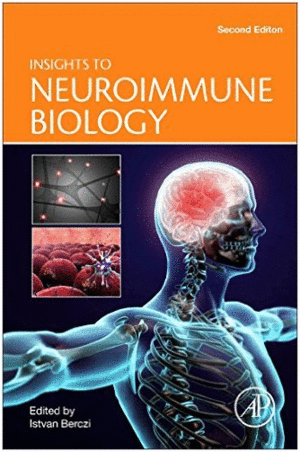
Insights to Neuroimmune Biology, Second Edition discusses the systemic regulatory network, coordination, organization, and interpretation of the rapidly accumulating knowledge on the topic of neuroimmune biology, with an ultimate goal of helping readers understand the function of higher organisms, including man, in their entire complexity. This publication provides assessments and interpretations of accumulated experimental evidence, enabling the scientific community to keep abreast of essential advancements of existing knowledge as we search for greater understanding of the biology of higher organisms.
Features:
• Provides information on the importance and applicability of the field of neuroimmunology
• Describes subjects that have shown significant recent developments
• Introduces a whole new dimension to neuroimmunology by discussing Epigenetic Immunoregulation
• Investigates the mechanisms and functions of the Neuroimmune Regulatory Supersystem
• Promotes translational research in the field of neuroimmune biology
• Covers challenges, such as dealing with problems of e.g., hypothalamic regulation of immune functions, interrelationships of stress and disease, epigenetic immunoregulation, neuroprotection, and neuroimmune regulation in pregnancy.
Author
Istvan Berczi, Department of Immunology, University of Manitoba, MB, Canada
 -5%
-5%
 -5%
-5%
 -5%
-5%
 -5%
-5%
 -5%
-5%
 -5%
-5%
 -5%
-5%
 -5%
-5%
 -5%
-5%
 -5%
-5%