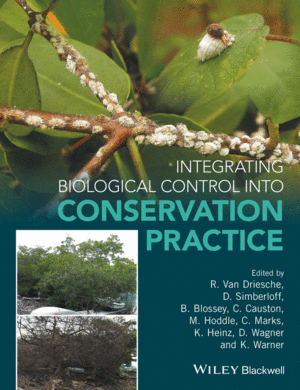
VAN DRIESCHE, R.; SIMBERLOFF, D.; BLOSSEY, B.
Descuento:
-5%Antes:
Despues:
109,67 €1 Integrating biological control into a conservation context: why is it necessary?, 1
2 Designing restoration programs based on understanding the drivers of ecological change, 4
3 Matching tools to management goals, 22
4 Tools in action: understanding tradeoffs through case histories, 54
5 Benefit–risk assessment of biological control in wildlands, 80
6 Systematics and biological control, 105
7 Forecasting unintended effects of natural enemies used for classical biological control of invasive species, 130
8 Measuring and evaluating ecological outcomes of biological control introductions, 161
9 Methods for evaluation of natural enemy impacts on invasive pests of wildlands, 189
10 Cases of biological control restoring natural systems, 208
11 Societal values expressed through policy and regulations concerning biological control releases, 247
12 Managing conflict over biological control: the case of strawberry guava in Hawaii, 264
13 An ethical framework for integrating biological control into conservation practice, 277
14 Economics of biological control for species invading wildlands, 294
15 The future of biological control: a proposal for fundamental reform, 314
Invasive species have a critical and growing effect upon natural areas. They can modify, degrade, or destroy wildland ecosystem structure and function, and reduce native biodiversity. Landscape-level solutions are needed to address these problems. Conservation biologists seek to limit such damage and restore ecosystems using a variety of approaches. One such approach is biological control: the deliberate importation and establishment of specialized natural enemies, which can address invasive species problems and which should be considered as a possible component of restoration. Biological control can be an effective tool against many invasive insects and plants but it has rarely been successfully employed against other groups. Safety is of paramount concern and requires that the natural enemies used be specialized and that targeted pests be drivers of ecological degradation. While modern approaches allow species to be selected with a high level of security, some risks do remain. However, as in all species introductions, these should be viewed in the context of the risk of failing to reduce the impact of the invasive species.
This unique book identifies the balance among these factors to show how biological control can be integrated into ecosystem restoration as practiced by conservation biologists. Jointly developed by conservation biologists and biological control scientists, it contains chapters on matching tools to management goals; tools in action; measuring and evaluating ecological outcomes of biological control introductions; managing conflict over biological control; and includes case studies as well as an ethical framework for integrating biological control and conservation practice.
Integrating Biological Control into Conservation Practice is suitable for graduate courses in invasive species management and biological control, as well as for research scientists in government and non-profit conservation organizations.
 -5%
-5%
 -5%
-5%
 -5%
-5%
 -5%
-5%
 -5%
-5%
 -5%
-5%
 -5%
-5%
 -5%
-5%
 -5%
-5%
 -5%
-5%