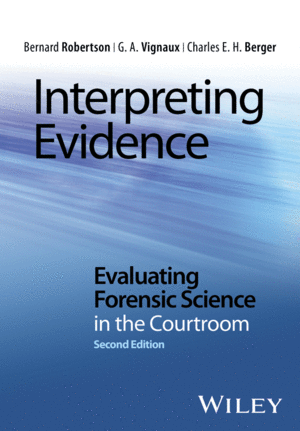
ROBERTSON, B.; VIGNAUX, G.A.; BERGER, C.E.H.
Descuento:
-5%Antes:
Despues:
43,18 €1. Introduction 1
2. Interpreting Scientific Evidence 9
3. The Alternative Hypothesis 29
4. What Questions Can the Expert Deal With? 47
5. Explaining the Strength of Evidence 55
6. The Case as a Whole 69
7. Forensic Science Methodology 85
8. Assigning Likelihood Ratios 107
9. Errors of Thinking 129
10. Frequentist Statistics and Database Matching 147
11. Implications for the Legal System 161
12. Conclusion 179
Appendix 183
The first edition of Interpreting Evidence was a ground-breaking work in this fascinating area of law. The first book-length reference explaining modern methods of interpreting scientific evidence that was aimed at lawyers and scientists alike. The methods presented by the authors use basic principles of logic and probability in a non-mathematical and clear manner. Interpreting Evidence avoids describing in great detail the ever changing techniques of forensic scientific examination - instead it explains in clear and logical terms principles of interpretation which are applicable to all forms of scientific evidence. These principles explain how witnesses should present their evidence and how the litigants should attempt to seek out the true value of the evidence. The book is illustrated throughout with studies of reported cases showing how the principles of interpretation advocated by the authors could have been used to avoid the problems which actually arose. In addition to explaining the principles of interpretation, the authors expose some common fallacies which exist in forensic science cases and consider some specific types of scientific evidence in the light of their analysis. The authors also consider the implications of their approach on reforming the law of evidence and procedure.
 -5%
-5%
 -5%
-5%
 -5%
-5%
 -5%
-5%
 -5%
-5%
 -5%
-5%
 -5%
-5%
 -5%
-5%
 -5%
-5%
 -5%
-5%