Descuento:
-5%Antes:
Despues:
138,31 €1. Neuroendocrine Control of Human Testicular Function
2. The Human Leydig Cell
3. Human Spermatogenesis and Its Regulation
4. Normal and Delayed Puberty
5. Congenital Hypogonadotropic Hypogonadism in Males: Clinical Features and Pathophysiology
6. Male Hypogonadism Resulting from Mutations in the Genes for the Gonadotropin Subunits and Their Receptors
7. Hypogonadism in Males with Congenital Adrenal Hyperplasia
8. Male Hypogonadism Due to Disorders of the Pituitary and Suprasellar Region
9. Klinefelter Syndrome and Other Forms of Primary Testicular Failure
10. The Undescended Testis
11. Male Hypogonadism and Liver Disease
12. Male Hypogonadism Due to Cancer and Cancer Treatments
13. Exercise and Male Hypogonadism: Testosterone, the Hypothalamic-Pituitary-Testicular Axis, and Exercise Training
14. Environmental Causes of Testicular Dysfunction
15. Sex Hormone-Binding Globulin and the Metabolic Syndrome
16. An Ensemble Perspective of Aging-Related Hypoandrogenemia in Men
17. Obesity and Aging in Late-Onset Hypogonadism
18. Androgen Replacement Therapy in Hypogonadal Men
19. Androgen Therapy for Hypogonadism in Men with Chronic Illnesses
20. Stimulation of Spermatogenesis in Hypogonadotropic Men
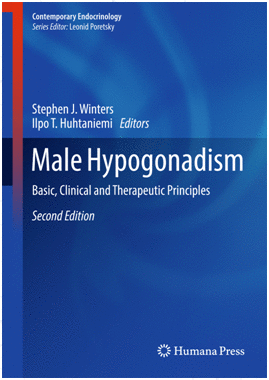
Now in a revised second edition, this comprehensive text covers all aspects of male hypogonadism from the basic science to clinical management, comprehensively explaining and applying new insights to the treatment of hypogonadal men. Chapters covering neuroendocrine control of testicular function, Leydig cell function, spermatogenesis, and normal and delayed puberty open the book. The focus then turns to the pathophysiology and treatment of hypogonadism and other forms of testicular dysfunction, such as Klinefelter syndrome, cryptorchidism, and disorders of the pituitary, as well as reproductive and endocrine consequences of cancer treatment, environmental factors, obesity and aging. Next are chapters that describe the available options for androgen replacement therapy, and the outcomes when men with hypogonadism of various causes are treated with testosterone, as well as a chapter devoted to current approaches to stimulating spermatogenesis in gonadotropin-deficient men.
Highly practical and updated with the latest available data, this second edition of Male Hypogonadism: Basic, Clinical and Therapeutic Principles cogently presents a large body of scientific information on male reproductive endocrinology to provide a thorough understanding of the pathophysiology, clinical characteristics, and treatments for disorders that adversely affect testicular function.
Features
• A revised and updated edition of the classic 2004 text on the etiology, diagnosis and treatment of male hypogonadism
• Discusses both normal and abnormal testicular function and hypogonadism due to genetic causes, environmental factors, pre-existing conditions, obesity and other metabolic issues, and aging
• Presents the latest clinical information on androgen replacement therapy and spermatogenesis stimulation
Authors
• Stephen J. Winters, MD, Professor of Medicine, Chief, Division of Endocrinology, Metabolism and Diabetes, University of Louisville, Louisville, KY, USA
• Ilpo Huhtaniemi, MD, PhD, Professor Emeritus of Reproductive Endocrinology, Institute of Reproductive and Developmental Biology, Department of Surgery & Cancer, Imperial College London, Hammermith Campus, London, UK
 -5%
-5%
 -5%
-5%
 -5%
-5%
 -5%
-5%
 -5%
-5%
 -5%
-5%
 -5%
-5%
 -5%
-5%
 -5%
-5%
 -5%
-5%