Descuento:
-5%Antes:
Despues:
543,39 €1. Overview of Metabolic Syndrome
2. Epidemiology of Obesity in the United States
3. Obesity in Latin America
4. Obesity in Sub-Saharan Africa
5. Obesity in Middle East
6. Metabolic Syndrome in South Asians
7. Obesity in East Asia
8. Evolution of Obesity
9. Genetics of Obesity
10. Genetics of Type 2 Diabetes
11. Genetics of Lipid Disorders
12. Genetics of Cardiovascular Risk in Obesity
13. Fetal Metabolic Programming
14. Childhood Environment and Obesity
15. Diet and Obesity (Macronutrients, Micronutrients, Nutritional Biochemistry)
16. The Built Environment and Obesity
17. Social and Community Networks and Obesity
18. Principles of Energy Homeostasis
19. Carbohydrate, Fat, and Protein Metabolism in Obesity
20. Brain Regulation of Feeding and Energy Homeostasis
21. Adipose Structure (White, Brown, Beige)
22. Adipokines and Metabolism
23. Gut Hormones and Obesity
24. Gut Microbiome, Obesity, and Metabolic Syndrome
25. Pancreatic Islet Adaptation and Failure in Obesity and Diabetes
26. Insulin Resistance in Obesity
27. Linking Inflammation, Obesity, and Diabetes
28. Dyslipidemia in Obesity
29. Myokines and Metabolism
30. Circadian Rhythms and Metabolism
31. Body Composition Assessment
32. Type 2 Diabetes: Etiology, Epidemiology, Pathogenesis, Treatment
33. Obesity and Cardiac Disease
34. Nonalcoholic Fatty Liver Disease
35. Metabolic Syndrome, GERD, Barrett’s Esophagus
36. Sarcopenic Obesity
37. Obstructive Sleep Apnea and Other Respiratory Disorders in Obesity
38. Reproductive Disorders and Obesity in Males and Females and Focus on the Polycystic Ovary Syndrome
39. Obesity, Metabolic Dysfunction, and Dementia
40. Linking Obesity, Metabolism, and Cancer
41. Endocrine Disorders Associated with Obesity
42. Kidney Disease in Obesity and Metabolic Syndrome
43. Diet, Exercise, and Behavior Therapy in the Treatment of Obesity and Metabolic Syndrome
44. Pharmacotherapy of Obesity and Metabolic Syndrome
45. Bariatric Surgery
46. Prevention and Treatment of Childhood Obesity and Metabolic Syndrome
47. Global, National, and Community Obesity Prevention Programs
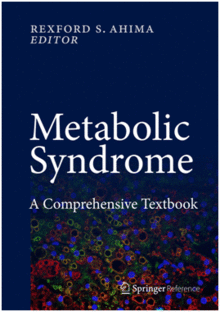
This comprehensive reference work edited by one of the leading authorities on obesity presents an up-to-date survey of the current scientific understanding of the metabolic syndrome, as well as an overview of the most significant changes to the field over the past 30 years. This volume is a thorough reference for obesity and the metabolic syndrome and will prove an indispensable resource for clinicians and researchers at levels worldwide. The obesity epidemic has generated immense interest in recent years due to the wide-ranging and significant adverse health and economic consequences that surround the problem. Much attention has been focused on behaviors that lead to obesity, in particular to over consumption of energy-dense food and to sedentary lifestyle. However, obesity is an extremely complex condition with poorly defined pathogenesis. In addition, when combined with other comorbidities such as hypertension and dyslipidemia, obesity often leads to a patient diagnosis of metabolic syndrome, a very troubling condition that has grown, and is continuing to grow, rapidly each year in prevalence worldwide. Metabolic syndrome is a cluster of conditions — increased blood pressure, a high blood sugar level, excess body fat around the waist and abnormal cholesterol levels — that occur together, increasing one’s risk of heart disease, stroke and diabetes. This resource covers the full range of scientific and clinical aspects: epidemiology, genetics, environmental factors, pathophysiology, diseases associated with obesity, and clinical management.
Features
• Provides a comprehensive overview to the basic science and clinical aspects of the topic
• Offers thorough, up-to-date epidemiology data in all key regions worldwide
• Discusses the standard of care for both pharmacologic and nonpharmacologic treatment of metabolic syndrome
Author
Dr. Ahima is a Professor of Medicine at the University of Pennsylvania. He received a BSc from the University of London, MD from the University of Ghana, and PhD from Tulane University in New Orleans, Louisiana. He did an internship and residency in internal medicine at the Albert Einstein College of Medicine, Jack D. Weiler Hospital and Jacobi Medical Center, in New York. He then moved to the Beth Israel Deaconess Medical Center and Harvard Medical School in Boston, for subspecialty training in Endocrinology, Diabetes and Metabolism, and postdoctoral research in the laboratory of Dr. Jeffrey Flier.
Dr. Ahima served as Instructor in Medicine at Harvard prior to moving to Penn in 1999. He received an Owl Club Teaching Award at Tulane University School of Medicine, Leo Davidoff Award at the Albert Einstein College of Medicine, Pfizer Postdoctoral Award at Harvard Medical School, and the Albert Stunkard Founder's Award at the University of Pennsylvania. Dr. Ahima was elected to the American Society for Clinical Investigation in 2005, and the Association of American Physicians in 2010. He is board certified in Internal Medicine, and Endocrinology, Diabetes and Metabolism, and is a Fellow of the American College of Physicians, and The Obesity Society. Dr. Ahima has served as a reviewer for the National Institutes of Health, Wellcome Foundation of the United Kingdom, and the Howard Hughes Medical Institute, and is a member of the Board of Scientific Counselors of
the National Institute on Alcohol Abuse and Alcoholism. Dr. Ahima is a past Associate Editor of Gastroenterology, and the Journal of Clinical Investigation, and currently a Co-Editor of the Annals of the New York Academy of Sciences Year in Diabetes and Obesity.
Dr. Ahima's research is focused on the central and peripheral regulation of energy homeostasis, and glucose and lipid metabolism. He is interested in how adipocyte hormones, such as leptin, adiponectin and resistin, act in the brain and other organs. These studies which have important implications for the pathophysiology of obesity and diabetes, involve the use of transgenic mice, chemical and immunoassays, in vivo metabolic measurements, neurochemistry, and tissue culture techniques. Dr. Ahima has a clinical interest in obesity, diabetes and related metabolic diseases. He is an attending endocrinologist at the Hospital of the University of Pennsylvania, director of Obesity Unit of the Institute for Diabetes, Obesity and Metabolism, and director of the Penn Diabetes Research Center Mouse Phenotyping Core.
 -5%
-5%
 -5%
-5%
 -5%
-5%
 -5%
-5%
 -5%
-5%
 -5%
-5%
 -5%
-5%
 -5%
-5%
 -5%
-5%
 -5%
-5%