Descuento:
-5%Antes:
Despues:
122,55 ۥ Part 1 Muscle Aging
1 Aging of the human neuromuscular system: pathological aspects, 3
2 Aging of the human neuromuscular system: clinical considerations, 33
3 Aging of the human neuromuscular system: patient vignettes, 55
4 Mitochondrial changes in aging with particular reference to muscle, and possible clinical consequences, 81
5 Protein degradation in aging cells and mitochondria: relevance to the neuromuscular system, 89
6 Human muscle protein metabolism in relation to exercise and aging: potential therapeutic applications, 97
• Part 2 Sporadic Inclusion-Body Myositis
7 Pathogenesis of sporadic inclusion-body myositis: role of aging and muscle-fiber degeneration, and accumulation of the same proteins as in Alzheimer and Parkinson brains, 111
8 Inflammatory and autoimmune features of inclusion-body myositis, 146
9 Sporadic inclusion-body myositis: clinical symptoms, physical findings, and diagnostic investigations, 159
10 Pathologic diagnostic criteria of sporadic inclusion-body myositis and hereditary inclusion-body myopathy muscle biopsies, 168
• Part 3 Hereditary Inclusion-Body Myopathies
11 Function and mutations of the GNE gene leading to distal myopathy with rimmed vacuoles/hereditary inclusion-body myopathy, animal models, and potential treatment, 177
12 GNE myopathy (hereditary inclusion-body myopathy/distal myopathy with rimmed vacuoles): clinical features and epidemiology, 191
13 Consequences of the hereditary inclusion-body myopathy-characteristic GNE mutations on muscle proteins in vivo and in vitro, 199
14 Function and structure of VCP mutations leading to inclusion-body myopathy associated with Paget disease of bone and frontotemporal dementia, 206
15 Clinical spectrum of VCP myopathy, Paget disease, and frontotemporal dementia: experimental models and potential treatments, 219
16 Drosophila and mouse models of hereditary myopathy caused by mutations in VCP/p97, 230
Index, 241
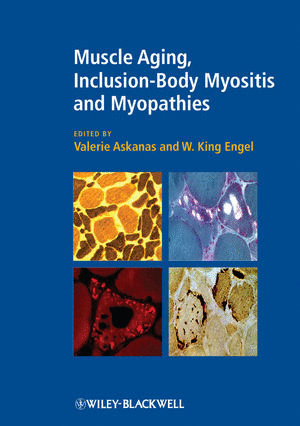
Muscle weakness with ageing is almost inevitable, generally beginning to manifest beyond the age of 40, and is usually unstoppable. It can lead to reduced mobility, increased risk of falling, injury, and even death. But “you’re just getting old” is not a sufficient diagnosis. Specific causes of neuromuscular symptoms may explain progressive muscle weakness, and should be investigated for potential treatment.
Muscle Ageing, Inclusion-Body Myositis and Myopathies explores the clinical and pathological expression of muscle weakness in aging persons. Case studies demonstrate how physicians can more accurately diagnose weakening elderly patients and make better management decisions.
It also explores sporadic inclusion-body myositis and hereditary inclusion-body myopathies. The former, the most common progressive muscle disease in the over 50s, is frequently under-diagnosed and, with the increasing population of aged individuals, is presenting a greater challenge. This disease of muscle has pathological similarities with the well-known Alzheimer and Parkinson brain diseases.
Edited and written by a leading international cast of authors, Muscle Ageing, Inclusion-Body Myositis and Myopathiesprovides a state-of-the-art guide to ageing-associated neuromuscular disorders. It should be in the hands of all those involved in the care of aging and muscle-weakened patients.
Authors
• Valerie Askanas, MD, PhD, Departments of Neurology and Pathology, University of Southern California, Keck School of Medicine, CA, USA
• W. King Engel, MD, Departments of Neurology and Pathology, University of Southern California, Keck School of Medicine, CA, USA
 -5%
-5%
 -5%
-5%
 -5%
-5%
 -5%
-5%
 -5%
-5%
 -5%
-5%
 -5%
-5%
 -5%
-5%
 -5%
-5%
 -5%
-5%