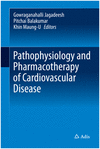
JAGADEESH, G.; BALAKUMAR, P.; MAUNG-U, K.
Descuento:
-5%Antes:
Despues:
217,35 €The present book covers the basic principles of cardiovascular physiology, pathophysiology and advanced pharmacology with particular emphasis on cellular mechanisms of drug action. It provides an update on the progress made in several aspects of cardiovascular diseases so that it might kindle scientists and clinicians alike in furthering basic and translational research. In addition, the book is expected to fill imperative gaps in understanding and optimally treating cardiovascular disease.
Authors
Dr. Gowraganahalli Jagadeesh has been working for the U.S. Food and Drug Administration as Senior Expert Pharmacologist in the Division of Cardiovascular and Renal Products. Dr. Jagadeesh received his undergraduate degree in pharmacy followed by MS and Ph.D degrees in Pharmacology from All India Institute of Medical Sciences, New Delhi and Banaras Hindu University, India, respectively. He was a Canadian Heart Foundation Fellow and NIH staff scientist at Canada, and Boston, respectively. Dr. Jagadeesh was an Adjunct Scientist at the NIH, Bethesda, while working at the FDA. His research areas have been in Cardiovascular Pharmacology. He has authoredaround 40 scientific papers and edited 3 books.
Dr. Pitchai Balakumar has been working as Associate Professor and Head of Pharmacology Unit at the Faculty of Pharmacy, AIMST University, Malaysia. Dr. Balakumar obtained M.Pharm and Ph.D degrees from Punjabi University, India. He has a vast teaching, research and editorial experience in the field of Cardiovascular Sciences, and trained several graduates. Dr. Balakumar edited 2 special issues, and published over 90 scientific papers in the areas of Cardiovascular, Diabetic and Renal Pharmacology. He received Top Reviewer Award from the Journal, Pharmacological Research. He is on the Editorial Team of Pharmacological Research, and Journal of Cardiovascular Disease Research.
Dr. Khin Maung U has been working as Senior Medical Officer in the Division of Cardiovascular and Renal Products, U.S. Food and Drug Administration, which he joined in 1996. His academic affiliations include Associate Professor, Hahnemann University School of Medicine (1991-1993) and Assistant Professor, Johns Hopkins University School of Medicine (1992-1995). Dr. Maung-U obtained his M.B., B.S, and M.Med.Sc. degrees from the Institute of Medicine I, Yangon, Myanmar, and Doctor of Medicine degree from the University of New South Wales, Sydney, Australia. He is Board Certified by the American Board of Internal Medicine. Dr. Maung-U has conducted many clinical trials, and published around 50 research papers.
Table of contents (62 chapter)
1.Heart Failure, Introduction
2.Cardiac Prevention Guidelines
3.Pathophysiology of Heart Failure
4.Calcium Signaling in Cardiovascular Physiology and Pathology
5.Sympathetic Nervous System Signaling in Heart Failure and Cardiac Aging
6.The Parasympathetic Nervous System and Heart Failure: Pathophysiology and Potential Therapeutic Modalities for Heart Failure
7.Risk for Sudden Cardiac Death in Heart Failure: Underlying Mechanisms and Therapeutic Modalities
8.Pharmacological Management of Heart Failure and Device Therapy in Heart Failure
9.Exercise in Heart Failure: Effectiveness Versus Safety
10.Cardiac Muscle and the Troponins
11.Circulating Cardiac Troponins as Specific Biomarkers of Myocardial Damage: Clinical Considerations
12.Natriuretic Peptides and Biomarkers in the Diagnosis of Heart Failure
13.MicroRNAs in Cardiovascular Disease: From Pathogenesis to Treatment
14.MicroRNA Therapeutics in Cardiovascular Disease
15.Gene Therapy in Cardiovascular Disease
16.Cardiac Hypertrophy and Hypertrophic Cardiomyopathy: Introduction and Management
17.Myocardial Metabolic Abnormalities and Cardiac Dysfunction
18.Molecular Targets in the Treatment of Cardiac Hypertrophy
19.Acute Coronary Syndromes: Introduction and Pathophysiologic Classification
20.Pathophysiology and Management of Myocardial Infarction
21.Pathophysiology and Lifetime Risk Factors for Atherosclerosis and Coronary Artery Disease in Women and in the Elderly
22.Medical Management of Chronic Stable Angina
23.Therapy for Acute Coronary Syndrome and Unstable Angina
24.Drug-Eluting Stents and Coronary Artery Disease
25.Atherosclerosis, Introduction and Pathophysiology
26.Vascular Endothelial Dysfunction and Atherosclerosis: Role of Nitric Oxide System
27.Cardioprotective Role of Omega-3 Polyunsaturated Fatty Acids Through the Regulation of Lipid Metabolism
28.Prevention and Treatment of Atherosclerotic Vascular Disease: Hypolipidemic Agents
29.Prevention of Cardiovascular Disease: The Polypill Concept
30.Hypertension: Introduction, Types, Causes, and Complications
31.Pathophysiology of Hypertension
32.Blood Pressure Genomics
33.Hypertension and Vascular Endothelial Growth Factors
34.Role of Gi Proteins in Hypertension
35.Sympathetic and Renin–Angiotensin Activity in the Pathophysiology of Hypertension
36.Drugs Targeting RAAS in the Treatment of Hypertension and Other Cardiovascular Diseases
37.Calcium Channel Blockers in the Treatment of Hypertension
38.Diuretics for the Treatment of Hypertension
39.Centrally Acting Antihypertensive Agents in the Treatment of Hypertension
40.Vasodilators and Management of Hypertensive Emergencies
41.Combination Therapy for the Clinical Management of Hypertension
42.Resistant Hypertension: Definition, Prevalence, and Therapeutic Approaches
43.Drug Adherence in Hypertension
44.The Glycemic Consequences of Antihypertensive Medications
45.Pathophysiology and Treatment of Pulmonary Arterial Hypertension
46.Cardiac Arrhythmias: Introduction, Electrophysiology of the Heart, Action Potential and Membrane Currents
47.Pathophysiology of Cardiac Arrhythmias: Arrhythmogenesis and Types of Arrhythmias
48.Proarrhythmic Effects of Antiarrhythmic and Non-antiarrhythmic Drugs
49.Drug-Induced Prolongation of the QT Interval: Present and Future Challenges for Drug Discovery
50.Treatment of Atrial Fibrillation and Atrial Flutter
51.Use of Mechanical Devices to Reduce Stroke in Atrial Fibrillation
52.Antiarrhythmic Drugs and Management of Ventricular Arrhythmias
53.Cardiac Arrest and Cardiopulmonary Resuscitation: Recent Advances in Management Approach for Cardiopulmonary Resuscitation
54.Valvular Heart Disease: Introduction, Clinical Pathogenesis, and Management
55.Mitral Regurgitation in Heart Failure: Mechanisms and Therapeutic Options
56.Pathophysiology and Management of Functional Tricuspid Regurgitation
57.Aortic Valve Stenosis and Aortic Regurgitation: Pathophysiology and Treatment
58.Induction of Valvular Heart Disease by Pharmacological Interventions
59.Pathophysiology and Pharmacotherapy of Adult Congenital Heart Disease
60.Cardiac Disease in Pregnancy
61.Placental Insufficiency: The Impact on Cardiovascular Health in the Mother and Her Offspring Across the Lifespan
62.miRNAs in Cardiovascular Development
 -5%
-5%
 -5%
-5%
 -5%
-5%
 -5%
-5%
 -5%
-5%
 -5%
-5%
 -5%
-5%
 -5%
-5%
 -5%
-5%
 -5%
-5%