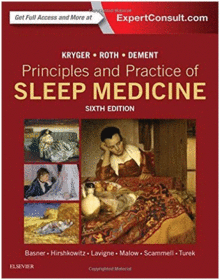
KRYGER, M.; ROTH, T.; DEMENT, W.
Descuento:
-5%Antes:
Despues:
179,82 ۥ Section 1: Normal Sleep and Its Variance
1. History of Sleep Physiology and Medicine
2. Normal Human Sleep: An Overview
3. Normal Aging
4. Daytime Sleepiness and Alertness
5. Sleep Deprivation
6. Genetics of Human Sleep
• Section 2: Sleep Mechanisms and Phylogeny
7. Neural Control of Sleep in Mammals
8. REM Sleep
9. Novel Techniques for identifying Sleep Mechanisms and Disorders
10. Sleep in Animals: A state of adaptive inactivity
• Section 3: Physiology in Sleep
11. Relevance of Sleep Physiology for Sleep Medicine Clinicians
12. What Brain Imaging Reveals about Sleep Generation and Maintenance?
13. Cardiovascular Physiology and Coupling with Respiration: Central and Autonomic Regulation
14. Cardiovascular Physiology: Autonomic Control in Health and in Sleep Disorders
15. Respiratory Physiology: Central Neural Control of Respiratory Neurons and Motoneurons during Sleep
16. Respiratory Physiology: Understanding the Control of Ventilation
17. Physiology of Upper and Lower Airways
18. Respiratory Physiology: Sleep at High Altitudes
19. Sleep and Host Defense
20. Endocrine Physiology in Relation to Sleep and Sleep Disturbances
21. Thermregulation in Sleep and Hibernation
22. Memory Processing in Relation to Sleep
23. Sensory and Motor Processing during Sleep and Wakefulness
24. Mechanism of Opioid Action on Sleep and Breathing
25. Pathophysiology of Sleep-wake Disturbances After Traumatic Brain Injury
• Section 4: Genetics and Genomic Basis of Sleep
26. Introduction: Genetics and Genomics of Sleep
27. Genetics and Genomics of Circadian Clocks
28. Genetics and Genomic Basis of Sleep in Simple Model Organisms
29. Genetics and Genomic Basis of Sleep in Rodents
30. Genetics and Genomic Basis of Sleep in Healthy Humans
31. Genetics and Genomic Basis of Sleep Disorders in Humans
• Section 5: Chronobiology
32. Introduction: Master Circadian Clock and Master Circadian Rhythm
33. Anatomy of the Mammalian Circadian System
34. Physiology of the Mammalian Circadian System
35. The Human Circadian Timing System and Sleep-Wake Regulation
36. Sleep Homeostasis and Models of Sleep Regulation
37. Circadian Rhythms in Sleepiness, Alertness, and Performance
38. Central and Peripheral Circadian Clocks
39. Circadian Disregulation and Mental and Physical Health
40. Circadian Disorders of the Sleep-Wake Cycle
• Section 6: Pharmacology
41. Hypnotic Medications: Mechanisms of Action and Pharmacologic Effects
42. Clinical Pharmacology of Other Drugs Used as Hypnotics
43. Wake-Promoting Medications: Basic Mechanisms and Pharmacology
44. Wake-Promoting Medications: Efficacy and Adverse Effects
45. Drugs That Disturb Sleep and Wakefulness
46. The effects of hypnotic drugs and other sedatives on driving and mission critical daytime activities
• Section 7: Psychobiology and Dreaming
47. Introduction
48. Why We Dream
49. Dream Content: Quantitative Findings
50. Brain Correlates of Sucessful Dream Recall
51. The Neurobiology of Dreaming
52. Lucid Dreaming
53. Nightmares
54. Incorporation of waking experiences into dreams
55. Dreams and Nightmares in Posttraumatic Stress Disorder
56. Emotion, Motivation, and Reward in Relation to Dreaming
• Section 8: Impact, Presentation, and Diagnosis
57. Approach to the Patient with Disordered Sleep
58. Cardinal Manifestations of Sleep Disorders
59. Physican Examination in Sleep Medicine
60. Use of Clinical Tools and Tests in Sleep Medicine
61. Classification of Sleep Disorders
62. Epidemiology of Sleep Disorders
63. Sleep Medicine, Public Policy, and Public Health
64. Sleep and Athletic Performance
• Section 9: Legal Topics in Sleep Medicine
65. Sleep Forensics: Criminal Culpability for Sleep-Related Violence
66. Legal Obligations of Persons Who Have Sleep Disorders or Who Treat or Hire Them
67. Fatigue and Safety Sensitive Professions
68. Sleep Medicine Clinical Practice and Compliance - United States
69. Sleep Medicine Clinical Practice and Compliance - Europe
• Section 10: Occupational Sleep Medicine
70. Introduction
71. Performance Decrements, Errors, and Accidents during Sleep Loss
72. Fatigue and Performance Modeling
73. Fatigue Risk Management
74. Drowsiness in Transportation Workers
75. Shift Work, Shift Work Disorder, and Jet Lag
76. Sleep Problems in First Responders and the Military
77. Sleep, occupational stress, and burnout
78. Optimizing Shift Scheduling
79.Managing OSA
• Section 11: Insonmnia
80. Insomnia: Recent Developments and Future Directions
81. Insomnia: Epidemiology and Risk Factors
82. Etiology and Pathophysiology of Insomnia
83. Assessment Techniques for Insomnia
84. Insomnia and Health
85. Psychological and Behavioral Treatmentsfor Insomnia I: Approaches and Efficacy
86. Psychological and Behavioral Treatments for Insomnia II: Adaptations, Dissemination, and Models of Care
87. Pharmacologic Treatment of Insomnia: Benzodiazepine Receptor Agonists
88. Pharmacologic Treatment: Other Medications
• Section 12: Neurological Disorders
89. Narcolepsy: Pathophysiology and Genetic Predisposition
90. Narcolepsy: Diagnosis and Management
91. Idiopathic Hypersomnia
92. Parkinsonism
93. Sleep and Stroke
94. Sleep and Neuromuscular Diseases
95. Restless Legs Syndrome and Periodic Limb Movements during Sleep
96. Alzheimer's Disease and Other Dementias
97. Epilepsy, Sleep, and Sleep Disorders
98. Other Neurological Disorders
99. Sleep Disorders after Traumatic Brain Injury
100. Kleine-Levin Syndrome
• Section 13: Parasomnias
101. Parasomnias: Overview and Approach
102. Non-REM Arousal Parasomnias
103. REM Sleep Parasomnias
104. Nightmares and Dream Disturbances
105. Other Parasomnias
106. Movement Disorders in Sleep
• Section 14: Sleep Breathing Disorders
107. Sleep Breathing Disorders: Classification and Clinical Overview
108. Sleep Breathing Disorders in Medicine: An Overview for Clinicians
109. Central Sleep Apnea: Definitions and Pathophysiology, Genetics, and Epidemiology
110. Central Sleep Apnea: Diagnosis and Management
111. Anatomy and Physiology of Upper Airway Obstruction
112. Snoring and Pathologic Upper Airway Resistance Syndromes
113. Obstructive Sleep Apnea: Definitions, Genetics, and Epidemiology
114. Obstructive Sleep Apnea: Clinical Features, Evaluation, and Principles of Management
115. Positive Airway Pressure Treatment for Obstructive Sleep Apnea-Hypopnea Syndrome
116. Medical and Device Management of Obstructive Sleep Apnea
117. Cognition and Performance in Patients with Obstructive Sleep Apnea
118. Obstructive Sleep Apnea and Metabolic Disorders
119. THE OVERLAP SYNDROMES OF SLEEP AND BREATHING DISORDERS
120. Obesity Hypoventilation Syndrome
121. Surgical Risk Assessment and Management in Patients With Sleep Breathing Disorders
122. High Altitude and Sleep Breathing Disorders
• Section 15: Cardiovascular Disorders
123. Sleep and Cardiovascular Disease: Present and Future
124. Sleep-Related Cardiac Risk
125. Cardiac Arrythmogenesis during Sleep: Mechanisms, Diagnosis, and Therapy
126. Cardiovascular Effects of Sleep-Related Breathing Disorders
127. Systemic and Pulmonary Hypertension in Obstructive Sleep Apnea
128 Coronary Artery Disease and Obstructive Sleep Apnea
129. Heart Failure
• Section 16: Other Medical Disorders
130. Sleep and Fatigue in Cancer Patients
131. Fibromyalgia and Chronic Fatigue Syndromes
132. Endocrine Disorders
133. Pain and Sleep
134. Sleep and Chronic Kidney Disease
135. Sleep in Critically Ill Patients
• Section 17: Psychiatric Disorders
136. Anxiety Disorders
137. Unipolar Major Depression
138. Bipolar Disorder
139. Schizophrenia
140. Medication and Substance Abuse
141. Adult ADHD
• Section 18: ENT Aspects of Sleep Medicine
142. Role of Dentistry and ENT in Sleep Medicine
143. Orophayngeal growth & Skeletal Malformations
144. Sleep Bruxism: Definition, Prevalence, Etiology and Mechanisms
145. Clinical Evaluations, Diagnostic Tools-Criteria, Differential for Sleep Bruxism (OMM, RBD, Breathing, Habits)
146. OROFACIAL PAIN/Temporomandibular Disorders IN RELATION TO SLEEP DISORDERED BREATHING AND SLEEP BRUXISM
147. Oral Appliances for Sleep-Disordered Breathing and Sleep Bruxism
148. Anesthesia in Upper Airway Surgery for Obstructive Sleep Apnea
149. Upper Airway Surgery to Treat SBD
150. Medication and Complementary Alternative Medicine for Sleep Bruxism and Sleep Apnea
• Section 19: Sleep in Older Adults
151. Psychiatric and Medical Comorbidities, and Effects of Medications in Older Adults
152. Obstructive Sleep Apnea in the Elderly
153. Insomnia in Older Adults
154. Circadian Rhythms in Older Adults
• Section 20: Sleep in Women
155. Sex Differences and Menstrual-Related Changes in Sleep and Circadian Rhythms
156. Sleep and Sleep Disorders Associated with Pregnancy
157.Sleep Disordered Breathing in Pregnancy
158. Sleep and the Postpartum Period
159. Menopause and Sleep
• Section 21: Instrumentation and Methodology
160. Polysomnography and Beyond
161. Sleep Stage Scoring
162. CNS Arousals & Cyclic Alternating Patterns
163. Neurologic Monitoring Techniques
164. Monitoring Techniques for Evaluating Suspected Sleep-Disordered Breathing
165. Home Sleep Testing
166. Cardiopulmonary Coupling
167. Pulse Wave Analysis
168. Recording and Scoring Sleep-related Movements
169. Evaluating Sleepiness
170. Chronobiologic Monitoring Techniques
171. Actigraphy
For nearly 30 years, Dr. Meir Kryger’s must-have guide to sleep medicine has been the gold standard in this fast-changing field. This essential, full-color reference includes more than 20 unique sections and over 170 chapters covering every aspect of sleep disorders, giving you the authoritative guidance you need to offer your patients the best possible care. For this updated 6th edition, extensive additional online material enhances the value of Principles and Practice of Sleep Medicine to your practice.
Features:
• Evidence-based content helps you make the most well-informed clinical decisions.
• An ideal resource for preparing for the sleep medicine fellowship examination.
New To This Edition:
• New content on sleep apnea, neurological disorders, legal aspects of sleep medicine, dental sleep medicine genetics, circadian disorders, geriatrics, women’s health, cardiovascular diseases, and occupational sleep medicine, keeps you fully up to date.
• Updates to scientific discoveries and clinical approaches ensure that you remain current with new knowledge that is advancing the diagnosis and management of sleep disorders.
• Online access to a wealth of extra material, including case studies, video clips, an image collection, updates to the text, self-assessment questions, a drug guide, classic articles, practice guidelines, patient brochures, Weblinks, information on the pioneers of sleep medicine, and more.
Authors
• Meir H. Kryger, MD. FRCPC, Professor of Medicine, Yale School of Medicine, New Haven, Connecticut.
• Thomas Roth, PhD, Director, Sleep Disorders and Research Center, Henry Ford Hospital, Detroit, MI, Professor, Department of Psychiatry, Wayne State University School of Medicine, Detroit, MI; Clinical Professor, Department of Psychiatry, University of Michigan College of Medicine, Ann Arbor, MI.
• William C. Dement, MD, PhD, Lowell W. and Josephine Q. Berry Professor of Psychiatry and Behavioral Sciences; Director, Sleep Disorders Center, Stanford University School of Medicine, Stanford, CA.
Table Of Contents:
• Section 1: Normal Sleep and Its Variance
• Section 2: Sleep Mechanisms and Phylogeny
• Section 3: Physiology in Sleep
• Section 4: Genetics and Genomic Basis of Sleep
• Section 5: Chronobiology
• Section 6: Pharmacology
• Section 7: Psychobiology and Dreaming
• Section 8: Impact, Presentation, and Diagnosis
• Section 9: Legal Topics in Sleep Medicine
• Section 10: Occupational Sleep Medicine
• Section 11: Insonmnia
• Section 12: Neurological Disorders
• Section 13: Parasomnias
• Section 14: Sleep Breathing Disorders
• Section 15: Cardiovascular Disorders
• Section 16: Other Medical Disorders
• Section 17: Psychiatric Disorders
• Section 18: ENT Aspects of Sleep Medicine
• Section 19: Sleep in Older Adults
• Section 20: Sleep in Women
• Section 21: Instrumentation and Methodology
 -5%
-5%
 -5%
-5%
 -5%
-5%
 -5%
-5%
 -5%
-5%
 -5%
-5%
 -5%
-5%
 -5%
-5%
 -5%
-5%
 -5%
-5%