Descuento:
-5%Antes:
Despues:
106,40 ۥ Chapter 1. Introduction to Joint Range of Motion Testing and Manual Muscle Testing
Range of Motion
Joint Motion
Planes and Axes
Range of Motion Categories
Factors Affecting Range of Motion
Manual Muscle Testing
Grading a Manual Muscle Test
Validity and Reliability
Patient Influence on Muscle Testing
Summary
• • Chapter 2. Shoulder
Structure and Function
Glenohumeral Joint
Sternoclavicular Joint
Acromioclavicular Joint
Scapulothoracic Joint
• Shoulder Examination
Range of Motion Normative Values
Shoulder Flexion
Shoulder Extension
Shoulder Abduction
Shoulder Horizontal Abduction
Shoulder Adduction
Horizontal Adduction
Medial (Internal) Rotation
Shoulder Lateral (External) Rotation
• Scapula Examination
Scapular and Scaption Motion and Normative Values
Scapular Abduction and Upward Rotation
Scapular Elevation
Scapular Adduction
Scapular Depression and Adduction
Scapular Adduction and Downward Rotation
Shoulder Scaption
• • Chapter 3. Elbow and Forearm
• Structure and Function
Humeroulnar Joint
Humeroradial Joint
Proximal Radioulnar Joint
Distal Radioulnar Joint
• Elbow Examination
Range of Motion Normative Values
Elbow Flexion
Elbow Extension
Forearm Supination
Forearm Pronation
• • Chapter 4. Wrist
• Structure and Function
Radiocarpal Joint
Midcarpal Joint
• Wrist Examination
Range of Motion Normative Values
Wrist Flexion
Wrist Extension
Wrist Radial Deviation
Ulnar Deviation
• • Chapter 5. Hand
• Structure and Function
Metacarpophalangeal Joints
Proximal and Distal Interphalangeal Joints
Thumb: Carpometacarpal Joint
Thumb: Metacarpophalangeal Joint
Thumb: Interphalangeal Joint
• Hand Examination
Finger Range of Motion Normative Values
Thumb Range of Motion Normative Values
Finger Metacarpophalangeal Flexion
Finger Metacarpophalangeal Extension
Finger Proximal Interphalangeal and Distal Interphalangeal Flexion
Finger Abduction
Finger Adduction
Thumb Carpometacarpal, Metacarpophalangeal, and Interphalangeal Flexion
Thumb Carpometacarpal, Metacarpophalangeal, and Interphalangeal Extension
Thumb Carpometacarpal Abduction
Thumb Carpometacarpal Adduction
Thumb Carpometacarpal and Little Finger Opposition
• • Chapter 6. Hip
• Structure and Function
Iliofemoral Joint
• Hip Examination
Range of Motion Normative Values
Hip Flexion
Hip Extension
Hip Abduction
Hip Adduction
Hip External Rotation
Hip Internal Rotation
• • Chapter 7. Knee
• Structure and Function
Tibiofemoral and Patellofemoral Joints
• Knee Examination
Range of Motion Normative Values
Knee Flexion
Knee Extension
• • Chapter 8. Ankle and Foot
• Structure and Function
Proximal and Distal Tibiofibular Joints
Talocrural Joint
Subtalar Joint
Transverse Tarsal (Midtarsal) Joint
Tarsometatarsal Joints
Metatarsophalangeal Joints
Interphalangeal Joints
• Ankle and Foot Examination
Range of Motion Normative Values
Ankle Plantarflexion
Ankle Dorsiflexion
Foot Inversion
Foot Eversion
Metatarsophalangeal Flexion of the Hallux and Toes
Distal and Proximal Interphalangeal Flexion of the Hallux and Toes
Hallux and Toe Metatarsophalangeal and Interphalangeal Extension
Hallux Abduction
• • Chapter 9. Cervical Spine
• Structure and Function
Atlanto-Occipital and Atlantoaxial Joints
Intervertebral and Zygapophyseal Joints
• Cervical Spine Examination
Range of Motion Normative Values
Cervical Flexion
Cervical Extension
Cervical Rotation
Cervical Lateral Flexion
• Chapter 10. Thoracic and Lumbar Spine
• Structure and Function of the Thoracic and Lumbar Spine
Intervertebral and Zygapophyseal Joints
Costovertebral and Costotransverse Joints
• Thoracolumbar Examination
Range of Motion Normative Values for Thoracolumbar Spine
Trunk Flexion and Rotation
Trunk Extension
Trunk Lateral Flexion
Quiet Inspiration
Forced Expiration
• Chapter 11. Temporomandibular Joint
• Structure and Function
Temporomandibular Joint
• Temporomandibular Joint Exam
Range of Motion Normative Values
Muscles of Mastication
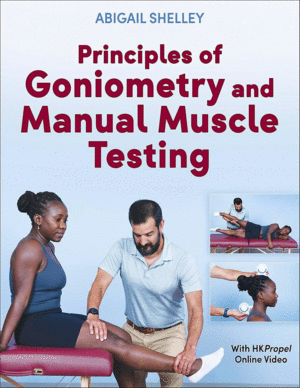
Principles of Goniometry and Manual Muscle Testing With HKPropel Online Video is an in-depth visual guide that integrates manual muscle testing and joint range of motion measurement into one comprehensive resource—reflecting how clinicians approach a complete patient assessment in real practice. Detailed anatomical illustrations bring to life the muscles, bones, and ligaments involved, making complex biomechanics easy to visualize and apply.
This essential text emphasizes the clinical importance of mastering both manual muscle testing and range of motion measurement—key competencies for all rehabilitation practitioners. It provides step-by-step guidance on how to apply these tests safely, efficiently, and effectively in clinical settings.
Each chapter includes user-friendly muscle tables summarizing the normative range of motion, muscle attachments, innervation, and vascular supply. Full-color visuals accompany every range of motion and manual muscle test, clearly depicting the targeted muscles and their bony attachments. Practical instructions guide the use of goniometers, tape measures, and inclinometers, with alternative testing positions included to accommodate diverse patient needs and clinical circumstances.
Throughout the book, clinical tips from experienced practitioners highlight stabilizing techniques, common compensations, and modifications for specific patient conditions. Richly illustrated with photographs and medical drawings, this highly visual text is complemented by online HKPropel videos demonstrating each manual muscle test, including authentic clinician–patient interactions and verbal cues.
Bridging theory and practice, Principles of Goniometry and Manual Muscle Testing equips students with the evidence-based assessment skills necessary to deliver safe, precise, and effective rehabilitative care.
Note: A code for accessing HKPropel online videos is included with all new print copies.
AUDIENCE
Graduate students in physical therapy, physical therapist assistant, occupational therapy, athletic training, prosthetics and orthotics, and chiropractic programs. Also an excellent reference for practicing professionals in these disciplines.
 -5%
-5%
 -5%
-5%
 -5%
-5%
 -5%
-5%
 -5%
-5%
 -5%
-5%
 -5%
-5%
 -5%
-5%
 -5%
-5%
 -5%
-5%