Descuento:
-5%Antes:
Despues:
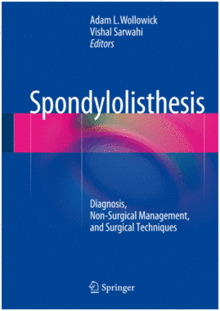
118,55 €- The most current and definitive source available that focuses specifically on the diagnosis and management of spondylolisthesis
- Provides detailed description of all surgical and non-surgical procedures used to treat spondylolisthesis
- Includes step-by-step illustrations of techniques, with pearls, pitfalls and unique challenges and outcomes
This comprehensive text is the most current and definitive source for information related to the care of adult and pediatric patients with spondylolisthesis. It contains a complete analysis of this common, yet intricate spinal condition, including basic science, diagnosis, non-surgical management, surgical techniques (including minimally invasive options) and outcomes. The management of the various types of spondylolisthesis requires a thorough understanding of both fundamental principles and subtle nuances, which are highlighted here in three sections. Part I details the basic principles, diagnosis and non-surgical management of spondylolisthesis, including imaging and classification. Part II covers surgical management, including a step-by-step discussion of strategies, techniques and tips that are necessary to apply standard procedures to this specific disorder. Procedures that are covered include decompression, spinal fusion from various approaches, and the latest minimally invasive techniques. Part III discusses the outcomes and complications of surgical treatment. Written and edited by top clinicians in the field, this book will be an invaluable resource for orthopedic and neurological spine surgeons, rehabilitation physicians, residents, fellows, and any caregiver who treats the spine.
Authors
- Adam L. Wollowick, MD, Assistant Professor of Orthopedic Surgery, Albert Einstein College of Medicine, New York, NY, USA.
- Vishal Sarwahi, MD, Associate Professor of Orthopedic Surgery, Albert Einstein College of Medicine, Department of Orthopedic Surgery, Montefiore Medical Center, Bronx, NY, USA.
Table of contents (28 chapters)
1.Spondylolisthesis: A Historical Perspective on Etiology, Diagnosis, and Treatment
2.Anatomy and Biomechanics Relevant to Spondylolisthesis
3.Pain Generators in Spondylolisthesis
4.Clinical Evaluation of Pediatric Patient with Spondylolisthesis
5.Clinical Evaluation of Adult Patient with Spondylolisthesis
6.Imaging Techniques for the Diagnosis of Spondylolisthesis
7.Classification of Spondylolisthesis
8.Role of the Pelvis in the Diagnosis and Management of L5-S1 Spondylolisthesis
9.Non-operative Treatment of Spondylolisthesis
10.Non-surgical Management of Spondylolisthesis in Adults
11.Surgical Techniques: Spondylolysis Repair
12.Decompression and Spinal Fusion in Low Grade Spondylolisthesis
13.Surgical Techniques: Posterior Lumbar Interbody Fusion
14.Anterior Lumbar Interbody Fusion
15.Minimally Invasive TLIF for Adult Spondylolisthesis
16.Surgical Technique: Lateral Interbody Fusion for Adult Spondylolisthesis
17.Presacral Fusion for Adult Spondylolisthesis
18.Surgical Techniques: Management of High-Grade Spondylolisthesis Including Reduction Techniques
19.Management of Spondyloptosis
20.Management of Traumatic Spondylolisthesis: Cervical and Lumbar
21.Spondylolisthesis Associated with Scoliosis
22.Results of Surgical Treatment of Adult Degenerative Spondylolisthesis
23.Results of Surgical Treatment of Low-Grade Adult Isthmic Spondylolisthesis
24.Results of Surgical Treatment of Pediatric Spondylolysis and Spondylolisthesis
25.Complications Associated with Surgical Treatment of Adult Spondylolisthesis
26.Complications Associated with Surgical Treatment of Pediatric Spondylolisthesis
27.Intraoperative Neuro-Monitoring During Spondylolisthesis Surgery
28.Value Considerations in the Surgical Management of Spondylolisthesis
 -5%
-5%
 -5%
-5%
 -5%
-5%
 -5%
-5%
 -5%
-5%
 -5%
-5%
 -5%
-5%
 -5%
-5%
 -5%
-5%
 -5%
-5%