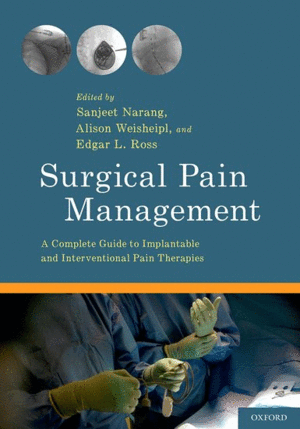
NARANG, S.; WEISHEIPL, A.; ROSS, E.
Descuento:
-5%Antes:
Despues:
96,82 ۥ Part I: Foundations of a Surgical Pain Management Team
1. Organization of an Implant Service
2. Anesthetic Management for Chronic Pain Surgery
3. Psychological Evaluation of the Surgical Pain Patient
4. Patient Education for Surgical Intervention for Pain
• Part II: Operations in Surgical Pain Management
5. Implantable Drug Delivery Systems
6. Externalized Epidural Infusion Systems
7. Dorsal Column Stimulation
8. Peripheral Nerve Stimulation
9. Craniofacial Nerve Stimulation
10. Field Stimulation
11. Sacral Nerve Stimulation
12. Treatment of Discogenic Pain: Minimally Invasive Procedures
13. Vertebroplasty and Kyphoplasty
14. Minimally Invasive Treatments for Spinal Stenosis: Percutaneous Lumbar
15. Endovenous Ablation
• Part III. Appendices
Appendix 1. ASRA Anticoagulation Guidelines
Appendix 2. Applied Spinal Anatomy
Appendix 3. Pharmacology of Intrathecal Medications
Appendix 4. CSF Pharmacokinetics
Appendix 5. Guide to Choosing Electrodes and Pulse Generators
Appendix 6. Problem Solving Stimulator Malfunction
Appendix 7. Implantable Devices and Equipment
Appendix 8. FDA Medical Device Reporting
Appendix 9. Sample OR Dictations
Appendix 10. Surgeon's Preference Cards
Appendix 11. Preventing Surgical Site Infections: Antimicrobial Prophylaxis, Skin Preparation and Surgical Field Draping
Appendix 12. Incisions, Wounds and Suturing
Appendix 13. Surgical Instruments
Surgical Pain Management is an essential, step-by-step guide to surgical techniques and the perioperative management of chronic pain patients whose treatment includes implantable therapies. Chapters review the steps necessary for defining a potential candidate for implant and the infrastructure to support the perioperative period and beyond, controversies in approaches for both intrathecal and spinal cord stimulation implants, healthcare education for patients with these devices, neuroaxial drug delivery, electrical stimulation of the peripheral and central nervous system, and a variety of invasive procedures for chronic and cancer pain. Appendices provide supplemental information regarding guidelines, physiology, technologies available, troubleshooting, and documentation required to organize an interventional service. This book details a range of approaches from basic implant therapies to more advanced therapies, making it an ideal companion to an advanced training program in interventional pain management and a useful resource for developing a team that will optimize care for some of the most difficult to treat chronic pain patients.
Features
• Covers neuroaxial drug delivery, electrical stimulation of the peripheral and central nervous system, and a variety of invasive procedures for chronic and cancer pain
• Outlines the steps for defining a potential candidate for implant and the infrastructure to support the perioperative period
• Addresses the psychological review of a patient prior to an implant
• Includes a primer in healthcare education for patients with impant devices
• Appendices provide supplemental information regarding guidelines, physiology, technologies available, troubleshooting, and documentation required to organize an interventional service
Authors
• Sanjeet Narang, MD, Assistant Professor in Anaesthesia, Department of Anesthesiology, Perioperative and Pain Medicine, Brigham and Womens Hospital, Harvard Medical School.
• Alison Weisheipl, MD, Instructor in Anaesthesia, Department of Anesthesiology, Perioperative and Pain Medicine, Brigham and Womens Hospital, Harvard Medical School.
• Edgar L. Ross, MD, Associate Professor of Anaesthesia, Department of Anesthesiology, Perioperative and Pain Medicine, Brigham and Womens Hospital, Harvard Medical School
 -5%
-5%
 -5%
-5%
 -5%
-5%
 -5%
-5%
 -5%
-5%
 -5%
-5%
 -5%
-5%
 -5%
-5%
 -5%
-5%
 -5%
-5%