Descuento:
-5%Antes:
Despues:
49,40 €Part I: Introduction to Teaching Adventure Education Theory
Chapter 1: The Unique Curriculum of Adventure Education
Chapter 2: Teaching Theory, Facts, and Abstract Concepts Effectively
Part II: Instructional Theory
Lesson 1: Addressing Multiple Ways of Knowing in Adventure Education
Lesson 2: Multiple Intelligence Theory and Learning Styles
Lesson 3: Using Backward Design: A Methodology to Develop Experiential Lessons
Part III: History
Lesson 4: Visionary and Actionary: The Influence of Hahn and Petzoldt on the Development of Adventure Education
Lesson 5: A History of Outdoor Adventure Education in the United States
Lesson 6: Creating History: Exploring the Past and Future of Adventure Education
Lesson 7: Adventure Education History Roundtable
Part IV: Educational and Philosophical Foundations
Lesson 8: The Four Uses of Outdoor Adventure Programming
Lesson 9: Philosophical Influences in Outdoor, Adventure, and Experiential Education
Lesson 10: Teaching Dewey's Experience and Education Experientially
Lesson 11: How Do We Learn? An Exploration of John Dewey's Pattern of Inquiry
Part V: Theoretical Foundations
Lesson 12: Creating the Right Amount of Challenge: Optimal Arousal Theory and the Adventure Experience Paradigm
Lesson 13: I Think I Can: Self-Efficacy Theory in Adventure Programming
Lesson 14: Attribution Theory in Adventure Programming
Lesson 15: Flow Theory: Risk Taking and Adventure Experiences
Part VI: Leadership Theories
Lesson 16: Conditional Outdoor Leadership Meets Kolb's Learning Cycle
Lesson 17: Three Functions of Leadership Essential to the Welfare of a Group
Lesson 18: Using Situational Leadership Theory in Decision Making
Lesson 19: Decision-Making Traps
Part VII: Professional Ethics and Social Justice Issues
Lesson 20: Introduction to Social Justice in Outdoor Adventure Education
Lesson 21: Outdoor Leadership With Gender in Mind
Lesson 22: The First-Generation Condition in Adventure Education
Lesson 23: Be Safe Out There: Critically Thinking Risk in Adventure Education
Part VIII: Group Development
Lesson 24: Small Group Development in Outdoor Adventure
Lesson 25: An Alternative to Tuckman: Three Factors in Group Development
Lesson 26: Setting the Stage: How to Get the Group Norms You Want
Lesson 27: Setting Group Norms and Expedition Behavior
Part IX: Processing and Facilitation Models
Lesson 28: Six Generations of Facilitation
Lesson 29: Visual Reflections: Using Photographs to Facilitate Adventure Experiences
Lesson 30: Growth at the Edge: Expanding Our Comfort Zones
Part X: The Human–Nature Connection
Lesson 31: My Land Is Your Land Too: American Public Land and Multiple-Use Policies
Lesson 32: Loving Nature Through Adventure: Examining Human–Nature Interaction
Lesson 33: A Walk in the Woods: Teaching Ecopsychology Experientially
Lesson 34: Loving the Land for Life: The Vital Role of Recreation Ecology
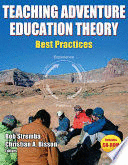
Teaching Adventure Education Theory: Best Practices offers stimulating, fun, and engaging activities instructors can use to assist future adventure educators, outdoor leaders, and group facilitators in making the connections between adventure theory and practice. Written for students and instructors who want their classroom experience to be as involving as the field environment, this professional reference features ready-to-use lesson plans that employ experiential education strategies for presenting the theory underlying the technical and facilitation skills required in leading adventure experiences.
 -5%
-5%
 -5%
-5%
 -5%
-5%
 -5%
-5%
 -5%
-5%
 -5%
-5%
 -5%
-5%
 -5%
-5%
 -5%
-5%
 -5%
-5%