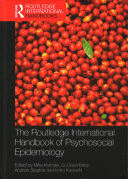
BATTY, D.; KIVIMÄKI, M.; STEPTOE, A.; KAWACHI, I.
Descuento:
-5%Antes:
Despues:
209,00 ۥ Part I: Concepts and Methods in the Study of Psychosocial Factors and Health
Chapter 1 Psychosocial Epidemiology: Concepts and Methods
Chapter 2 Causal Inference in Psychosocial Epidemiology
• Part II: Psychosocial Factors Linked to Health
Chapter 3 Social Networks
Chapter 4 Workplace Stressors
Chapter 5 Religious Communities
Chapter 6 Depression and Negative Emotions
Chapter 7 Positive Psychological Wellbeing
Chapter 8 Personality, Intelligence and Genes
Chapter 9 Gender Differences in the Health Effects of Psychosocial Factors
• Part III: Psychosocial Factors in the Etiology and Prognosis of Specific Diseases and Disorders
Chapter 10 Type 2 Diabetes
Chapter 11 Cardiovascular Diseases
Chapter 12 Cancer
Chapter 13 Infectious Disease
Chapter 14 Suicide
Chapter 15 Mood Disorders and Cognitive Impairment
Chapter 16 Sleep Disorders
• Part IV: Interventions and Policy Implications
Chapter 17 Behavioral and Psychological Interventions for the Management of Cardiac Patients
Chapter 18 Targeting Psychosocial Factors to Reduce Health Inequalities
• Part V: Future Research Directions
Chapter 19 Current State of Psychosocial Epidemiology: Where Are We? What Are the Next Steps?
The health effects of psychosocial factors are a widely discussed and controversial topic. Do positive and negative emotions affect our risk of developing physical disease? Are depressive individuals more likely to have cancer than those with an optimistic outlook on life? And what is the role of IQ in staying healthy and recovering from disease? Importantly, can we improve our health and life expectancy by avoiding certain psychosocial risk factors and maximizing positive psychological well-being? These and other questions are the focus of psychosocial epidemiology, a discipline linking psychological, social and biological sciences.
The Routledge International Handbook of Psychosocial Epidemiology is the first book to map this growing discipline. Including contributions from many of the leading researchers in the field, it is divided into five sections:
• Part I: Methodological challenges in studying psychosocial factors and health;
• Part II: Psychosocial factors in the etiology and prognosis of chronic diseases;
• Part III: Controversies in the psychosocial approach;
• Part IV: Interventions and policy implications
• Part V: Future research directions
Taking advantage of a huge growth in research in recent years, the book provides the reader with the essentials to evaluate the diverse set of studies on psychosocial factors and health that are published today, and describes study designs in this field of research, progress in judging the validity of epidemiological evidence, as well as challenges in translating evidence into action.
This is an important and timely book. Providing methodological rigour, critical analysis and the policy implications of this emerging field of study, The Routledge International Handbook of Psychosocial Epidemiology will be an invaluable resource for students and researchers within both behavioural and medical sciences, as well as policy makers and others working in health and social care.
 -5%
-5%
 -5%
-5%
 -5%
-5%
 -5%
-5%
 -5%
-5%
 -5%
-5%
 -5%
-5%
 -5%
-5%
 -5%
-5%
 -5%
-5%