Descuento:
-5%Antes:
Despues:
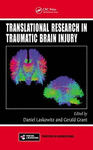
135,01 €Translational Research in Traumatic Brain Injury is designed to address the key issues in the epidemiology, basic science, and treatment of traumatic brain injury (TBI). Edited by two clinically active physician scientists, the book presents contributions from faculty who are international leaders in the areas of molecular biology, translational modeling, treatment, and rehabilitation of traumatic brain injury.
The book covers a wide scope of TBI research critically important to the neurobiology research community, clinicians involved in the care of TBI patients, as well as industry leaders interested in developing new therapies for acute brain injury. It examines the full spectrum of TBI events, from mild sports-related injuries to severe blast injuries. It discusses fundamental cell mechanisms and pathophysiology, as well as animal modeling, clinical diagnosis, current therapeutic strategies, and future treatments. The book also describes long-term neuropsychiatric symptoms and the relationship of TBI to the development of post-concussive syndrome and post-traumatic stress disorder.
Features
- Covers the spectrum of TBI, from mild sports-related injuries to severe blast injuries
- Discusses fundamental cell mechanisms and pathophysiology, as well as animal modeling, clinical diagnosis, current therapeutic strategies, and future treatments
-Describes long-term neuropsychiatric symptoms and the relationship of TBI to the development of post-concussive syndrome and post-traumatic stress disorder
- Written by international leaders across multiple disciplines, including neurobiology, neurology, neurosurgery, intensive care medicine, psychiatry, and rehabilitative medicine.
Editor(s) Bio
Daniel Laskowitz, MD, MHS, professor of neurology, anesthesiology & neurobiology; and director, Neurovascular Laboratories, Duke University Medical Center, Durham, North Carolina, USA
Gerald A. Grant, MD, FACS, division chief, Pediatric Neurosurgery; vice chair for pediatric neurosurgery and associate program director; and associate professor, Department of Neurosurgery; Stanford University/Lucile Packard Children's Hospital, California, USA.
Table of Contents
Epidemiology
Sport-Related Traumatic Brain Injury
Diffuse Axonal Injury
Blood-Brain Barrier Pathophysiology following Traumatic Brain Injury
Cellular and Molecular Mechanisms of Secondary Neuronal Injury following Traumatic Brain Injury
Neuroinflammation
Neurosteroids and Traumatic Brain Injury: Translating Biomarkers to Therapeutics; Overview and Pilot Investigations in Iraq and Afghanistan Era Veterans
Neuroplasticity after Traumatic Brain Injury
Genetic Influences in Traumatic Brain Injury
Modeling Post-Traumatic Epilepsy for Therapy Development
Translational Principles of Neuroprotective and Neurorestorative Therapy Testing in Animal Models of Traumatic Brain Injury
Biomarkers of Traumatic Brain Injury and Their Relationship to Pathology
Advanced Neuroimaging of Mild Traumatic Brain Injury
Epilepsy after Traumatic Brain Injury
Intracranial Pressure Monitoring and Management
Post-Traumatic Stress Disorder: Relationship to Traumatic Brain Injury and Approach to Treatment
Traumatic Brain Injury and Potential for Neuromodulation
Enhanced Functional Outcome from Traumatic Brain Injury with Brain-Machine Interface Neuromodulation: Neuroprosthetic Scaling in Relation to Injury Severity
Neurocognitive and Psychiatric Symptoms following Mild Traumatic Brain Injury
 -5%
-5%
 -5%
-5%
 -5%
-5%
 -5%
-5%
 -5%
-5%
 -5%
-5%
 -5%
-5%
 -5%
-5%
 -5%
-5%
 -5%
-5%